William Blake’s Visual Poetry: The Little Boy Lost

The poems of William Blake’s Songs of Innocence and Experience appear so simplistic at first blush, they were once interpreted as nursery rhymes; but the juxtaposition of thematically connected poems in Innocence and Experience, respectively, as well as the accompanying visual art, elucidate the complexity of even the most innocent poems. “The Little Boy Lost/The Little Boy Found,” for example, appears to be a straightforward, comforting reassurance of God’s infinite love. But the combination of these poems with “A Little Boy Lost” serves as a bitter, blistering indictment of the Church as a hypocritical appropriation, one that uses God’s words of forgiveness as a tool for placing the masses under a merciless doctrine.

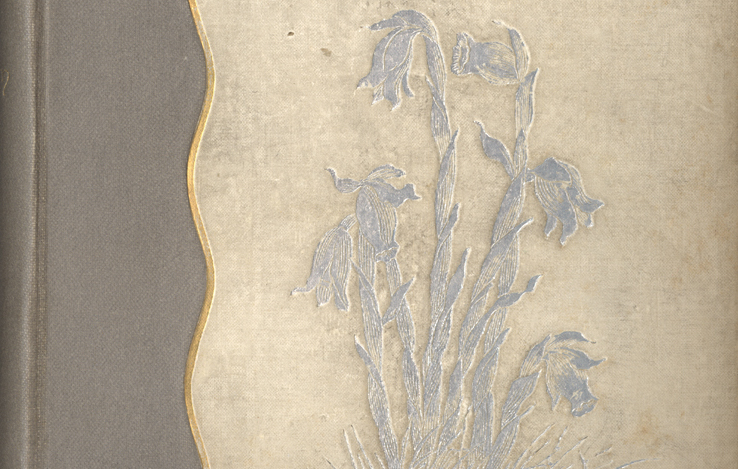
William_Blake_The_Little_Boy_Lost_Songs_of_Innocence_-_Copy_Y_1825_Metropolitan Continue reading →

Sylvia Plath’s “Two Sisters of Persephone” as the Opposing Sides of Femininity

Persephone is a liminal figure, evoking the duality of the seasons which, as a result of the pathetic fallacy, we associate with dualities of human nature: light versus dark, warmth versus cold, passion versus frigidity, humanity versus roboticism. In Sylvia Plath’s “Two Sisters of Persephone,” this duality is used to uncover the contradictions inherent in the societal ideal of femininity. Continue reading →

The best books we read in 2015

Janes:

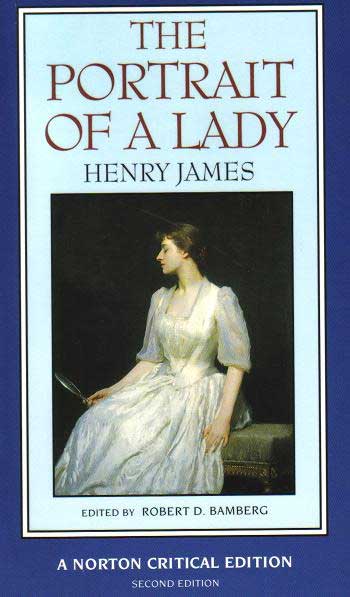
The Portrait of a Lady

Henry James

69-a-Portrait-of-a-Lady

No one delves into a character’s psychology quite like Henry James, and in Isabel Archer, he found a protagonist more than worthy of his meticulous deconstruction. She’s a formidable intellectual who doesn’t see the value in intellectual pursuits, she’s an idealist who isn’t quite sure what her ideals are, she’s an independent who is completely and utterly controlled by the malignant, vicious people in her life. She has a complex, distinctive personality and an indomitable will, all of which is systematically broken down by a small man with “exquisite taste.” It’s as tragic as it is insightful, sensitively portraying the experience of patriarchal oppression through the eyes of a woman who is determined to “behave picturesquely.”

Acquired: through kht, who warned me I would relate to the protagonist to an uncomfortable extent. I’ve thrice been told that I am like Isabel Archer, once as a lament, once as a compliment [To be clear, this was me –kht], and once as a scathing criticism. Only a Henry James character could find so many different ways to be relatable to a real person’s life.

Continue reading →

Emily Dickinson, Zen Buddhism, and Finding Harmony in Dichotomy or: How I Learned to Stop Worrying and Love the Paradox

In his first letter to a young poet, Rainer Maria Rilke mused, “Things aren’t all so tangible and sayable as people would usually have us believe; most experiences are unsayable, they happen in a space that no word has ever entered.” He finds himself confronted with the paradox inherent to most poetry, namely that it aims to express the inexpressible. Continue reading →

Euripides + Britney Spears = Feminist Manifesto in Rachel Cusk’s “Medea”

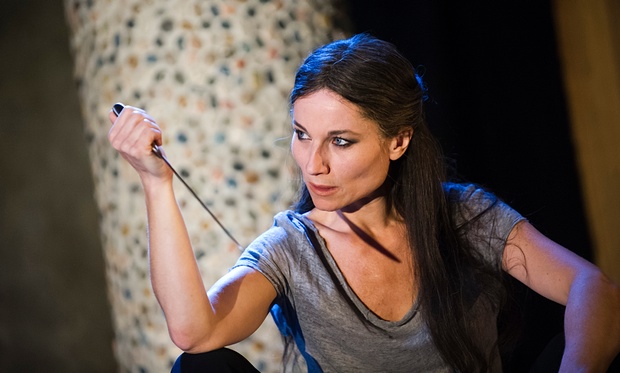
“Why are you watching me? Do you enjoy watching me suffer?… I am all the parts of you that you disown. I take on all of the punishment you abdicate. That’s why you’re here.”

Rachel Cusk’s modern interpretation of Euripides’s classic tragedy is a lot of things—consistently compelling, politically engaged, extremely loud—but subtle it is not. While I am nothing if not a fan of tendentiously feminist literature, sociopolitical themes are much more effective when they are a little more subliminal. In Medea, characters break the fourth wall to explicitly implicate the audience in Medea’s taboo desire to murder her children not once, but twice, and the lack of delicacy dilutes the play’s worthy message. Continue reading →

Proust, Picasso, and Prose Poetry: Swann’s Way as an Emptying of Impressions

“The thing that I want to insist upon is that Picasso’s gift is completely the gift of a painter and a draughtsman, he is a man who always has the need of emptying himself, of completely emptying himself, it is necessary that he should be greatly stimulated so that he could be active enough to empty himself completely.”

So says Gertrude Stein in her intimate, lyrical biography of Picasso, which is not so much a chronology of his life as it is a love letter to his artistry. Among many other things, she submits that Picasso’s creative impetus derived from a need to empty himself of certain reverberating impressions; he would become captivated, even tormented by an idea or image, and by painting, he would purge that image from his mind and be done with it.

Continue reading →