UnREAL 2×02 “Insurgent”: Who Wins the Battle of Oppressions This Week?

A friend of mine was on the New York City subway late at night, and a man came up to her, got right in her face, and said, “You’re one of those white girls with an ass and titties. They wouldn’t even want to sell you, but I would want to buy you.”

Then, he turned to two young black women sitting nearby, and said, “They would sell you. But I wouldn’t buy you.”

This was an incredibly scary experience for my friend, but I’ll give this guy credit for one thing: it was one of the most succinct explanations for intersectional oppression I’ve ever heard.

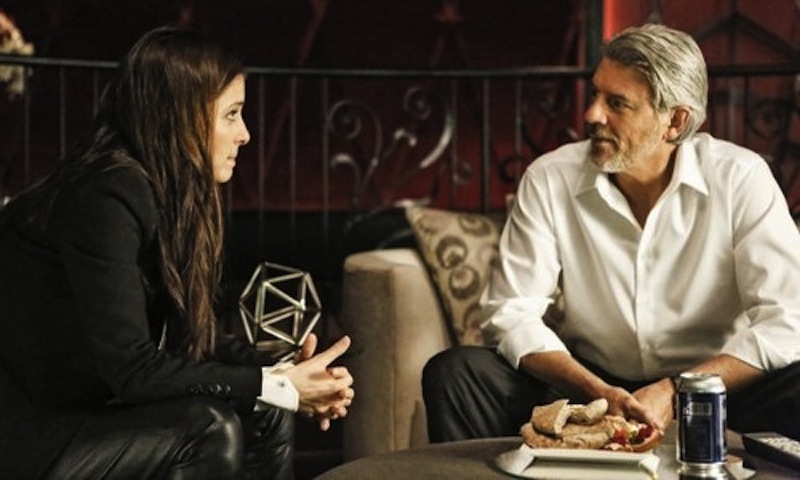
And it perfectly explicates the themes of UnREAL, which has taken it upon itself to explore the connections/oppositions between white supremacy and the Men’s Rights Movement, between white feminism and the Black Lives Matter movement. I feel like if a drunk guy from the New York City subway wandered onto the set of Everlasting, this is what he would say to the contestants.
Continue reading →
“Is it true? Well, it’s there”

In the Summer 2016 issue of The Paris Review, Dag Solstad is asked about the line he wrote: “Since my father died, I have not been myself. I have been the writer Dag Solstad.”

“I had strong doubts about publishing that passage. Is it a little too grand, a little too clever? Is it a statement I can stand by? But I decided I had to leave it in. Is it true? Well, it’s there. That’s really all I can say. It’s there and it’s meant to be there.”

Dag Solstad has been called the Philip Roth of Scandinavian literature. His father died when he was eleven.

UnREAL 2×01 “War”: Who Wins the Battle of Oppressions?

What with Hillary Clinton’s perceived “white feminism,” the public reaction to the Bill Cosby rape allegations, and even the Black Lives Matter movement to a certain extent, the intersection between different oppressions is at the forefront of social justice, and not always in a positive way. Hillary Clinton’s election to the White House would be an unqualified win for white, privileged women in the US, while people of color and non-Americans might disproportionately suffer from her more illiberal views on economics, foreign policy, and national security. Similarly, those who called Bill Cosby’s victims attention-seekers were being misogynistic, but many of them were partially reacting to a long and painful history of black men being falsely accused of violating white women. And while Cosby 100% deserved to be publicly shamed and ostracized for raping dozens of women, did he deserve it more than Roman Polanski, or even Woody Allen, both of whom still have relatively thriving careers?

A year ago, I wouldn’t have believed that a Lifetime show would be one of the boldest and most nuanced explorations of these complex (and emotionally fraught) political issues in popular culture right now–but it is. UnREAL has always been a feminist show, which has become all the more explicit in its second season, but now, with the addition of the first black suitor, it’s also tackling racial inequality. And even better, it’s showing us the ways in which feminism and anti-racism interact, and often appear to be incompatible with each other. Continue reading →

Every Scene in The Neon Demon Should Have Looked Like This

Nicolas Winding Refn’s The Neon Demon is an irreproachably beautiful movie, which is problematic when making a movie about beauty. Ostensibly the movie decries objectification of beautiful women, while the cinematography enhances it, to the point that any feminist critique is rendered inert at best and hypocritical at worst. Continue reading →

Links We Loved This Week: 6/4/16-6/10/16

UnREAL: “Walter White in power heels: UnREAL is evil, twisted, unmissable TV” from The Guardian

Ploughshares takes a look at literary friendships throughout history. Didn’t know that Oscar Wilde inspired Count Dracula, but how PERFECT that he did!

The Tiny Doors art project in Atlanta shows you that “Not all doors need to be opened to be interesting” (via Atlas Obscura)

At The Millions, Kaulie Lewis writes about writerly jealousy. “When we say, ‘all of my ideas have already been had,’ what we’re expressing isn’t jealousy, it’s doubt in our own creativity, in our worthiness to write about anything at all.”

A Fundamental Misunderstanding of Tess of the D’Urbervilles

Tess is just a humble milkmaid when the local landowner has his wicked way. Her new beau, the smarmy Angel Clare, is none too pleased when he finds out she’s already been deflowered. What is a girl to do? Bloody revenge of course, and an ending to touch the hardest of hearts.

Pulp! The Classics is an inspired idea. Who wouldn’t want to read irreverent re-tellings of classic literature that highlight their universal–and therefore, potentially lowbrow–themes? After all, with slightly different execution, Hamlet is just a revenge story, The Great Gatsby is just a crime thriller, and Alice’s Adventures in Wonderland is a forebear to Pineapple Express.

And maybe one could argue that this Tess of the D’Urbervilles cover proves a similar theorem: without Hardy’s sensitive and socially conscious artistry, Tess is nothing more than exploitative erotica. But this cover isn’t just oversimplifying the book’s themes, as the other covers in the series do; it’s actively (and offensively) reversing them. “She’s no angel”?? Tess is about a compassionate, highly moral young woman who is raped, loses her child, and is unfairly ostracized (and then executed) as a result of hypocritical Victorian sexual mores. The subtitle of the novel is “A Pure Woman Faithfully Presented.” It takes its name from “the D’Urbervilles”–the noble name Tess’ father vainly tries to appropriate for their family–rather than her actual name, Tess Durbeyfield, because she possesses nobility in spite of her social standing. The entire point of the book is that she is a goddamn angel, in all the ways that count.

The 100 Recap: 3×15 “Perverse Instantiation pt 1”

“Perverse instantiation,” in Nick Bostrom’s A.I. superintelligence theory, is a “malignant failure,” or a failure that involves human extinction. This specific type of malignant failure involves an A.I. interpreting an unfortunately-worded instruction in the most destructive way possible, like a real-life vengeance demon.

The obvious parallel is A.L.I.E.’s decision to make the world a better place by nuking the human population, but it can potentially refer to any and all of A.L.I.E.’s throwing-the-baby-out-with-the-bathwater decisions. Bostrom gives the skin-crawling example of an A.I. interpreting the directive to “make everyone smile” as “freeze their facial muscles into permanent smiles like even creepier Jokers.” That’s A.L.I.E. 1.0’s world domination plan, and the theme of the third season of The 100, in a nutshell.

(P.S. I’m sorry I’m so far behind, I will do my best to fill in the gaps. But here’s what you need to know from the last few episodes: Bellamy’s plotline was somewhat redeemed by the show’s meta-commentary that he’s sort of always been an asshole; Monty and Harper are a random, but adorable pairing; Raven is a bad-ass, and Lindsay Morgan is the best actor on this show; Pike got infinitely more likable once he was placed in an underdog position, but I still hate him; and Ontari is pointless and literally the worst, now and always.)

All right, let’s get on with the recap: Continue reading →

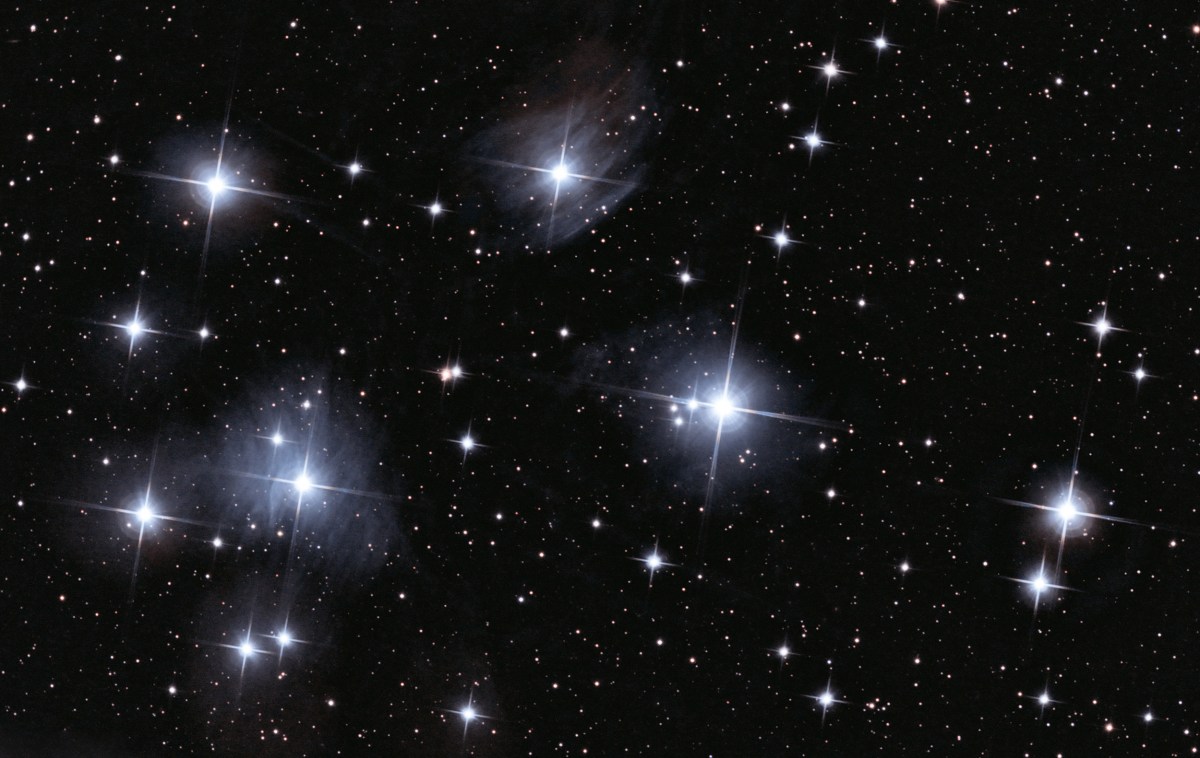
The Pleiades by Ivan Bunin

It’s dark. Not caring where I go, which path I follow,
Past sleepy ponds I stroll.
Of autumn freshness, leaves and fruit the fragrance mellow
Drifts over all.
The garden’s almost bare, and through the branches whitely
The stars of evening show.
Dead silence reigns. Murk clothes the paths. It’s nighttime.
My steps are slow.

They’re slow, but wake the hush… High in the sky’s cool
darkness,
A princely diadem,
The icy Pleiades blaze diamond-like and sparkle,
Each one a gem.

On its face, “The Pleiades” by Nobel Prize-winning Russian author Ivan Bunin (translation from All Poetry) contains an inspirational (and somewhat unoriginal) message: when life seems dark, confusing, and/or pointless, look at the stars, and their transcendent light will lead you to your spiritual home. Continue reading →

Peter and Wendy by J.M. Barrie

…every spring cleaning time, except when he forgets, Peter comes for Margaret and takes her to the Neverland, where she tells him stories about himself, to which he listens eagerly. When Margaret grows up she will have a daughter, who is to be Peter’s mother in turn; and thus it will go on, so long as children are gay and innocent and heartless.

“Gay and innocent and heartless” is the perfect last line for J.M. Barrie’s classic novel about never growing up, because children can’t understand it. When I read this line as a child, it nagged at me for years, because I couldn’t reconcile the apparent contradiction. Innocence is the epitome of goodness, or so I thought.

But once I, like Wendy, betrayed Peter Pan by growing older, and reread the novel as an adult, the conclusion made perfect sense. Peter is the embodiment of guilelessness and joyfulness, and so is relentlessly charming, but is also terminally selfish. Innocence is unsustainable unless it is accompanied by a pure self-centeredness, which is why we never blink an eye when Peter forgets Wendy for decades, or is tempted to stab Wendy’s little daughter, Jane, shortly before the end. He wants to eliminate this child out of resentment, because she symbolizes the passage of time that has taken Wendy away from him, and reminds him of the reality that he would prefer to reject. But he doesn’t mean anything by it.

So what better day to celebrate this author than the ultimate symbol of the passage of time: his birthday. Happy 156th birthday, J.M. Barrie!

The Huntsman: Winter’s War Is a Movie, and These Are Things That Happen In It

I’ve never seen a movie quite like The Huntsman: Winter’s War. Don’t get me wrong, it’s a truly terrible movie, one of the worst I’ve ever seen. But if nothing else, it’s a true marvel of innovation. It’s the only movie I’ve ever seen that is a prequel, and also a sequel, and also manages to retcon the entire first movie. It stars Jessica Chastain, Emily Blunt, and Charlize Theron, and is damn near unwatchable (unless you’re laughing through the entire thing, as the Adversion writers were). And it’s so stupid, that in order to make fun of it, all you have to do is literally describe what happens. Little to no editorializing necessary.

So here goes: Continue reading →