The Affair 2×01: Divorce Is the Ultimate He-Said She-Said

When The Affair premiered last fall, it was one of the best shows I had ever seen. The Rashomon-style format was the gimmick, along with the wildly misleading posters of Dominic West and Ruth Wilson getting sexy in a pool, but the execution was anything but gimmicky, as the first few episodes utilized the premise to its full potential. Every subtle yet glaring discrepancy within the emotionally charged memories was attributable to a cannily observed limitation of individual perception, whether the result of personality traits, class, gender, etc. The result was an incisive, often devastating exploration of human frailty, cognitive dissonance, and self-deception.

Continue reading →

Proust, Picasso, and Prose Poetry: Swann’s Way as an Emptying of Impressions

“The thing that I want to insist upon is that Picasso’s gift is completely the gift of a painter and a draughtsman, he is a man who always has the need of emptying himself, of completely emptying himself, it is necessary that he should be greatly stimulated so that he could be active enough to empty himself completely.”

So says Gertrude Stein in her intimate, lyrical biography of Picasso, which is not so much a chronology of his life as it is a love letter to his artistry. Among many other things, she submits that Picasso’s creative impetus derived from a need to empty himself of certain reverberating impressions; he would become captivated, even tormented by an idea or image, and by painting, he would purge that image from his mind and be done with it.

Continue reading →

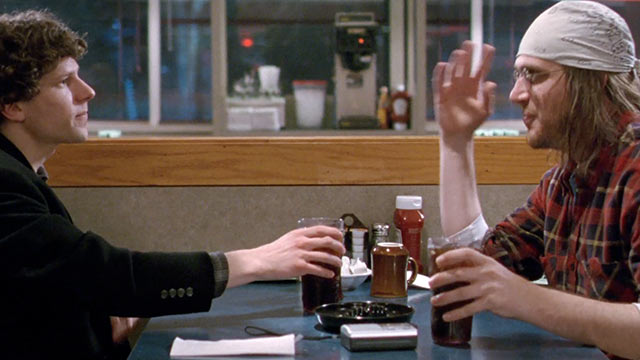
Although Of Course You End Up Becoming Someone Else: A Review of ‘The End of the Tour’

The End of the Tour was never going to escape the David Foster Wallace mystique; the famously expansive author has become paradigmatic of the “tortured artist,” to the point that his literature is now almost inextricable from the tragedy surrounding his life and death. He was (it already seems hard to remember) a flesh-and-blood man, but for better and for worse he embodies an archetype in American culture: the misunderstood genius, the voice of an alienated generation, the lotus flower who was too pure to stay mired in the crudities of this world for very long.

Continue reading →