The 100 Recap: 3×02 “Wanheda pt 2”

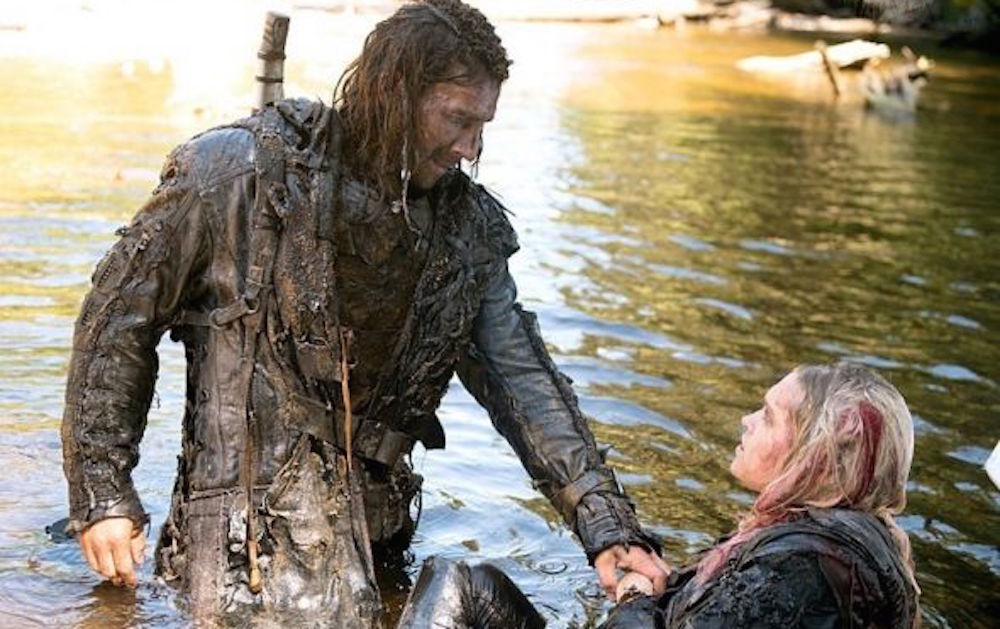
Previously on The 100: Bellamy began narrating, and I guess we’re sticking with that. Jaha became an unhinged evangelical, Clarke broke Bellamy’s (and Bellarke shippers’) heart(s) by leaving Camp Jaha, Jasper did his best pre-massacre season two Finn impression, and the Ice Nation queen wants to steal Clarke’s powers by killing her. Also, Clarke hooked up with a pretty Grounder and was kidnapped by an equally pretty bounty hunter, but only so much can fit into one montage. Continue reading →
Talking about “The Flick”

This post is a little different: JD and KHT went to see The Flick a few months ago, and loved it, while feeling that there was more going on than we were aware of in the moment. We tried a dialogue format to talk through what made it so interesting.

KHT: I really enjoyed Annie Baker’s Pulitzer-prize-winning The Flick, a play set in a low-traffic Worcester movie theater that still uses a 35mm projector, which I saw last week at the intimate Barrow Street Theater. The three main actors—Louisa Krause, Aaron Clifton Moten, and Matthew Maher—had a lot of poise and sense of timing as they brought to life a specific, very slow rhythm that was both familiar to me from awkward-pause-heavy comedies like The Office and totally new.

Continue reading →

The 100 Recap: 3×01 “Wanheda pt 1”

When it began, The 100 had all the ingredients for an aggressively mediocre CW show. Ludicrously attractive actors, down to the lowly extras? Check! Contrived post-apocalyptic scenario in which all of the main characters are necessarily (and conveniently) under 18 years old? Check! Dead-eyed, mind-numbingly generic male lead whom all the coolest women on the show love for no reason? Check! (For a time at least, RIP Finn and everything.)

Sidebar: How much was Finn the Nate? He was totally the Nate. Continue reading →

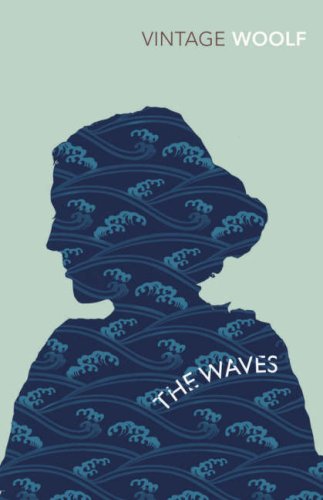
Virginia Woolf’s The Waves as Both a Loss and Assertion of Individual Identity

The sun had not yet risen. The sea was indistinguishable from the sky, except that the sea was slightly creased as if a cloth had wrinkles in it. Gradually as the sky whitened a dark line lay on the horizon dividing the sea from the sky and the grey cloth became barred with thick strokes moving, one after another, beneath the surface, following each other, pursuing each other, perpetually.

[jd: Shit, that’s good.]

Continue reading →

William Blake’s Visual Poetry: The Little Boy Lost

The poems of William Blake’s Songs of Innocence and Experience appear so simplistic at first blush, they were once interpreted as nursery rhymes; but the juxtaposition of thematically connected poems in Innocence and Experience, respectively, as well as the accompanying visual art, elucidate the complexity of even the most innocent poems. “The Little Boy Lost/The Little Boy Found,” for example, appears to be a straightforward, comforting reassurance of God’s infinite love. But the combination of these poems with “A Little Boy Lost” serves as a bitter, blistering indictment of the Church as a hypocritical appropriation, one that uses God’s words of forgiveness as a tool for placing the masses under a merciless doctrine.

William_Blake_The_Little_Boy_Lost_Songs_of_Innocence_-_Copy_Y_1825_Metropolitan Continue reading →

The Good Wife Recap: 7×11 “Iowa”

I have been watching The Good Wife in real time for about a year and a half now, after a breathless catch-up binge after the epic fifth season. Last year, season six, brought a few episodes that punched you in the gut. But in the chaotic, farcical season seven—which turned Alicia’s children into little adults, reduced her love life to a mere smirking flirtation with her investigator, and separated her almost entirely from any storylines with the colleagues that once brought out the best in her, Cary and Diane—I haven’t been able to finish an episode and say to myself, “That was so fucking good.”

Until now.

Continue reading →

Noah Solloway’s Great American Thriller Come to Life

The Affair is at its very best when it’s skewering privileged white male literary darlings through the ever-insufferable Noah Solloway, our resident aspiring Great American Novelist. In between name-dropping Jonathan Franzen, Philip Roth, and, of course, the sagacious Ernest Hemingway, Noah says things like “As a straight white man, I am automatically disqualified from winning the PEN/Faulkner… it’s impossible to be a man in 2015!” and uses Jonathan Safran Foer and Nicole Krauss’s divorce attorney because “now they live in adjacent brownstones in Brooklyn!”
Continue reading →

Nashville Recap: 4×09 “Three’s a Crowd”

Previously on Nashville: Gabriella made Luke drop Will for being gay; Rayna and Markus worked together and she told him he exhausted her; Scarlett and Caleb had trouble being long-distance; Rayna signed Maddie and Daphne to Highway 65 to keep Maddie under control; and Avery sang one of Will’s songs and got him the attention of a publisher.

We open on tour with Scarlett and Gunnar, with one of their songs playing in the background and the highway skittering by. A montage follows, which I can’t help being excited about, because who doesn’t love montages? [Janes: word.] Scarlett spends a lot of time staring moodily out the window and then scribbling lyrics in this montage. Gunnar spends a lot of time roughhousing with Erin and the other crew members, and sneaking glances at Scarlett. In the background Scarlett’s voice croons, “Only Tennessee can save me now.”

Continue reading →

Sylvia Plath’s “Two Sisters of Persephone” as the Opposing Sides of Femininity

Persephone is a liminal figure, evoking the duality of the seasons which, as a result of the pathetic fallacy, we associate with dualities of human nature: light versus dark, warmth versus cold, passion versus frigidity, humanity versus roboticism. In Sylvia Plath’s “Two Sisters of Persephone,” this duality is used to uncover the contradictions inherent in the societal ideal of femininity. Continue reading →