William Styron’s Appropriation

“‘Have you read D.H. Lawrence’s Lady Chatterly’s Lover?’ I had to say no.

…’Read it,’ she said, her voice husky and intense now, ‘get it and read it, for the sake of your salvation… Lawrence has the answer–oh, he knows so much about fucking. He says that when you fuck, you go to the dark gods.'”

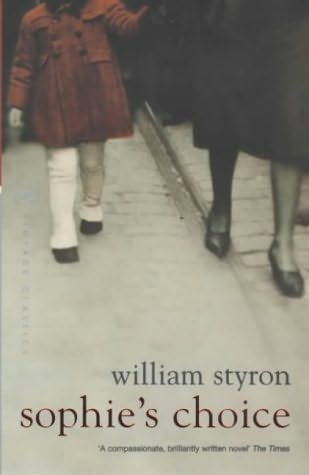
Sophie’s Choice by William Styron is more sensitive and vividly characterized than I would have expected, but is still a manipulative, politically problematic story that appropriates the Holocaust narrative to create slightly sickly melodrama. By explicitly framing the titular “Choice” (made by a blonde Polish woman, because Styron legitimately thought the Jews were paid too much attention) as the “ultimate evil,” the novel is clearly attempting to meditate on the concept of evil, but only manages to sensationalize it. Continue reading →

Tribeca Film Festival Review: Equals

Just prior to screening his newest film, Equals, at the Tribeca Film Festival, Drake Doremus told the audience that he was “not an intellectual filmmaker, but an emotional one,” and left us with this piece of advice for watching the movie: “Turn off your heads and turn on your hearts.” Continue reading →

Henry James’ Rebel Without a Cause

“Her life should always be in harmony with the most pleasing impression she should produce; she would be what she appeared, and she would appear what she was. Sometimes she went so far as to wish that she might find herself some day in a difficult position, so that she should have the pleasure of being as heroic as the occasion demanded.”

Henry James, born on this day in 1843, created the indomitably original female character of Isabel Archer, who, like many of the greatest Victorian heroines, was idealistic to the extent that it was her defining quality, and yet did not have particularly defined ideals. Just as Middlemarch‘s Dorothea was a revolutionary without a revolution, a Theresa who never had the opportunity to manifest her lofty ambitions into independent action, Isabel Archer was a highly moral woman who was never expected to develop any specific morals, an idealist without any ideals.

The 100 Recap: 3×09 “Stealing Fire”

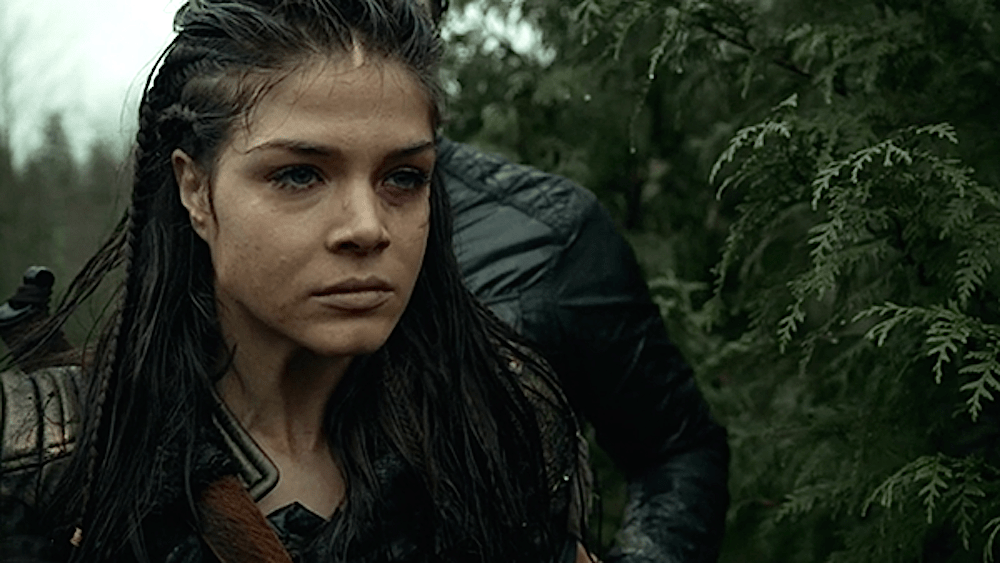
Another day, another controversial death on The 100. Regardless of your opinions on the two major character deaths that have occurred in the last three episodes, there’s no denying that The 100 has inspired a ton of constructive discourse (as well as some counterproductive ad hominem attacks) about social issues, the responsibility of media creators to their fans, and the role of violence on television. Even when it makes mistakes, The 100 is thoughtful enough to stimulate important conversations, which I would say is commendable in itself.

All right. Let’s do this. Continue reading →

The advent of Spring, according to Emily Brontë

Why did the morning rise to break
So great, so pure a spell,
And scorch with fire the tranquil cheek

Where your cool radiance fell?

Poetry so often conflates springtime with rebirth, renaissance, hope, and the like, but Emily Brontë’s work begs to differ. The narrator of “Ah! Why, Because the Dazzling Sun” spends the poem shutting her eyes tightly (and vainly) against the “blood-red” light that “throbs with her heart” and destroys her peace. And as she says in “Fall, leaves, fall”:

I shall smile when wreaths of snow
Blossom where the rose should grow;
I shall sing when night’s decay

Ushers in a drearier day.

Brontë’s poetry seems keenly aware of the Icarus myth: her relationship to daylight and springtime springs from an understanding that sunlight is not the product of a benign reflection, a consumptive fire.

From “Ah! Why, Because the Dazzling Sun” again:

O Stars and Dreams and Gentle Night;
O Night and Stars return!
And hide me from the hostile light
That does not warm, but burn—

“Faustine” by Algernon Charles Swinburne

You have the face that suits a woman
      For her soul’s screen —
The sort of beauty that’s called human

      In hell, Faustine.

The meaning of the name Faustine is “made of the stuff of Faust,” just as Eve was made from the rib of Adam and Pandora at the hands of Hephaestus. By Swinburne’s own admission, Faustine’s unearthly beauty signals a missed opportunity for exaltation, a gift she squanders “to waste the loves and ruin the lives of men.”
The poem is concerned with one central idea, he says:

“…the transmigration of a single soul, doomed as though by accident from the first to all evil and no good, through many ages and forms, but clad always in the same type of fleshly beauty.”

And she has taken many forms through the ages, both in mythology and in literature. The gorgeous Faustine who is caressed by dishonest serpents and receives “flower of kisses without fruit of love”–she could be Daisy Buchanan, or Rosamond Vincy, or even Lily Bart. The awareness that beautiful, hollow monsters are made, not born, varies in each of these works, but there is virtually none in Swinburne’s (otherwise quite moving) poem.
You seem a thing that hinges hold,
      A love-machine
With clockwork joints of supple gold —
      No more, Faustine.

Vincent Van Gogh’s “Long Grass with Butterflies”


“Long Grass with Butterflies” was painted at the end of Van Gogh’s stay at the Saint-Paul Asylum, since renamed the Clinique Van Gogh. In his letters, he described the “abandoned gardens” depicted in the painting, in which “the grass grows tall and unkempt, mixed with all kinds of weeds.”

We cannot speculate about his mental or emotional state, but the fact that these “abandoned” gardens are behind an asylum is poignant and telling in itself. Van Gogh’s characteristically vibrant colors are underscored with a discordant black, and the eponymous black-outlined butterflies are beautiful when found, but are nearly lost in the chaotic, kinetic landscape.

The viewer of the garden is looking downwards, limited to a perspective that is quite literally depressed. Beyond the long, untended grass we can see a thin, faraway footpath with an unseen destination, as well as the beginnings of trees that are abruptly cut off. The world has become very small, this tells us–small and loud with tantalizing signs of an expansive elsewhere just outside of our field of vision.

The Americans: America as the “Evil Empire”

The third season finale of The Americans, aptly titled “March 8, 1983,” ends with a quietly seething Elizabeth watching Reagan’s famed “Evil Empire” speech, which took a hard line against the Soviet Union’s nuclear missile installation and almost single-handedly escalated the Cold War. The episode included only a few of the most recognizable lines, ending on the fear-mongering mic drop: “…they are the focus of evil in the modern world.” But when reading the speech in full, it becomes clear that the meaning of its inclusion is multi-layered, as it precisely reflects the ideological conflict–and implicit critique of American culture–that is central to the show.

Continue reading →

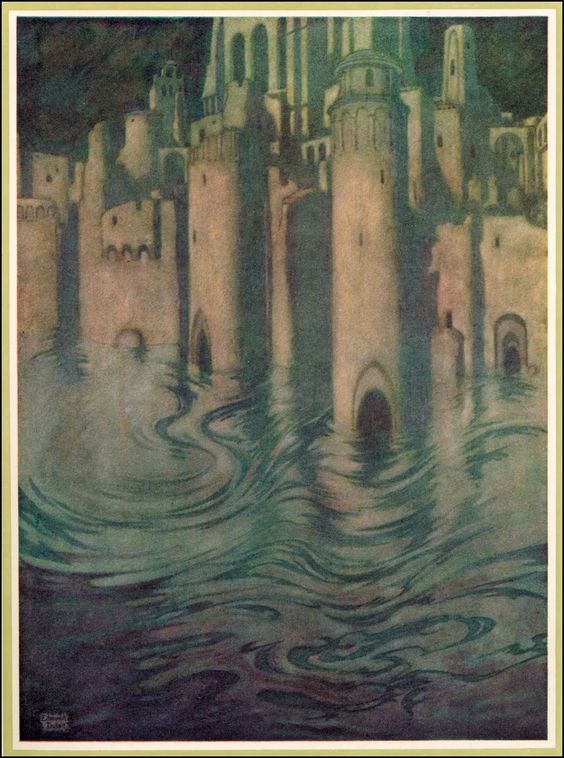
Edgar Allan Poe’s “The City in the Sea”

But lo, a stir is in the air!
The wave- there is a movement there!
As if the towers had thrust aside,
In slightly sinking, the dull tide-
As if their tops had feebly given
A void within the filmy Heaven.

Poe’s “City in the Sea” refers to the city erected by Death, in which all lost souls, squandered riches, and fallen idols are laid to waste in “melancholy waters,” as Death looks “gigantically down” in satisfaction.

But these lines also tend to remind me of the metropolis in which kht, jd, and I reside: New York, of course. On its best days, the towering skyline ascends to the heavens and punctures them, sending their contents spilling down onto us. On its worst days:

Hell, rising from a thousand thrones,
Shall do it reverence.