
The third episode of Braindead continued to be enjoyable due to the show’s zany mix of horror and satire, despite some gaping plot holes. Read on for a recap and a brief review!


The third episode of Braindead continued to be enjoyable due to the show’s zany mix of horror and satire, despite some gaping plot holes. Read on for a recap and a brief review!
The British Library this week takes a look at WH Auden’s poems.
At We Minored in Film, Kelly Konda ponders the role of the thematically relevant backstory in survival stories.
Chimamanda Ngozi Adichie wrote a delicious piece of what is essentially Virginia-Woolf-inspired fanfiction about Melania Trump for the NYT.
Happy Fourth of July! 12 authors, including Teju Cole and Jay McInerney, picked their essential American books for Time. What would you pick?

Center Stage: On Pointe is a straight-to-Lifetime sequel to the cult hit dance movie of 2000, which is probably most famous for its unhinged final dance sequence, which involved, among other things, Michael Jackson, awkward sex, and an EPIC costume change. So if you expected that it would be an even more absurd movie than the original, with gloriously nonsensical plot devices, inexplicable directing choices, and satisfying shoutouts to the original, you’re in luck: it was. And here are 21 reasons why.
(Fair warning: if you aren’t a fan of the original, you probably won’t get much out of this post. Or out of the movie itself, to be honest.)

We have SINGING PREVIOUSLIES!!! A male voice (which I hoped was Aaron Tveit’s but, tragically, is not) narrates everything that happened last week: the mysterious meteor, the space bugs, the brains, Laurel’s sad documentary, Luke’s job, Laurel’s job, Gareth’s job, Senator Weenus’s job, the government shutdown, Luke’s affair, Scarlett’s “space bug problem,” and the good doctor’s exploding brain. It’s pretty damn catchy too.
Laurel’s listening to pundits discuss the shutdown and trying to spray the ants that are parading in a column right towards her feet. They do not give one shit about the spray, so she stomps on a couple of them with her hipster-masquerading-as-professional-lady clunky boots, and then runs out the door. The camera gets way too close to the ants, who seem to be nudging each other and possibly reanimating. Yikes. OK so it’s been like a day, and already these things are ALL OVER D.C. and in Laurel’s actual apartment. Realistically, does Laurel have a chance of surviving the season with her brain intact? Things are moving way too quickly here.
For those in NYC, happy Pride! Check out these photos from NYC Pride through the years at AMNY. It’s definitely cool to see the early days of the march, but 2013 is my favorite.
Probably the best-titled book list we’ve seen in awhile: the Millions has “A Summer Reading List for Wretched Assholes Who Prefer to Wallow in Someone Else’s Misery.”
The Times’s fashion photographer, Bill Cunningham, passed away recently and the Times has a moving obit.
And finally, Robert Downey Jr. shared this amazing wedding cake on his Facebook page.

We open with title cards over a set of TVs playing political rants, like we’re in the world’s most stressful Best Buy or something. “In the year 2016 there was a growing sense that people were losing their minds… and no one knew why… until now.” I’m a fan of the eighties-pulp-movie red lettering they’re using.
We see some people being overpowered by a wave right after what looks like a meteor strike.
“Meanwhile,” the title cards announce: and we cut to a young woman on the phone fretting that she can’t get some unnamed large amount of money in a week, but will try when she gets back to LA. She hangs up, swears to herself, then stares at a set of monitors playing news about a fire, Hillary Clinton, and Trump. (They really lucked out here that Trump won the nomination. I mean, not as citizens of course, but as writers peddling a show about how politicians are having their brains eaten.)
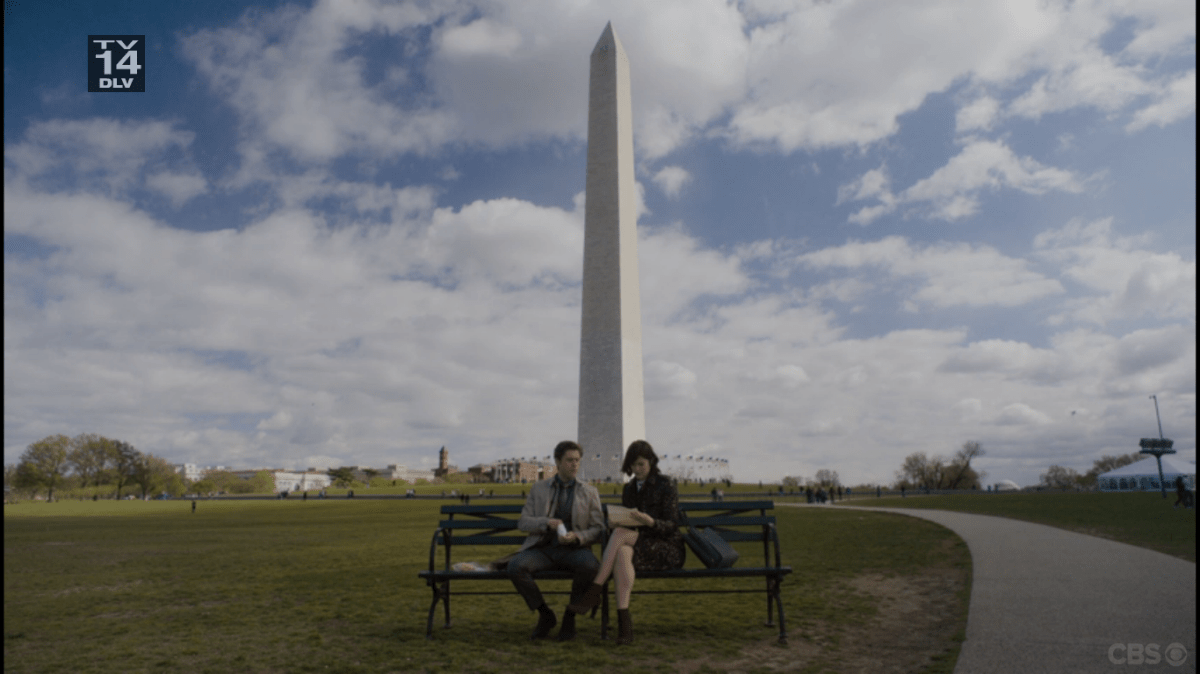
I didn’t really think there was any way for a show with a premise like that of Braindead, the newest show from Good Wife creators Michelle and Robert King, to hold together. A political satire, but with zombies? It sounded like a hot mess. I wouldn’t have been surprised if Aaron Tveit (who plays Laurel’s love interest and counterpart across the aisle) had suddenly broken into song: everyone loves a Zombie Musical!
But I was wrong. I admit my massive fangirlishness for The Good Wife may be biasing me here, but I think this show, like Buffy or Community, has the potential to be one of those curios that in its refusal to fit in a genre manages to carve out a big new place for itself in the TV landscape.
There was a Friday Night Lights reunion in Austin. Where do Minka and Taylor think their characters are now? (at Vanity Fair via Lainey Gossip, which has lots of squee-worthy pictures of same.)
The New Yorker has a compelling piece on unREAL.
…beneath the giddy parody “Unreal” offers a singular meditation on stardom, media mendacity, sexism, and competition among women
The Bronte society is having some, errrr, issues (from the Guardian, via the Rumpus).
You’re the Worst‘s Aya Cash gives a typically funny and insightful interview with Indiewire. Give this girl all the Emmys!
An interesting piece from AV Club on the success of Scream and the curious subsequent disappearance of meta-horror. (But would Cabin in the Woods, You’re Next, and Tucker and Dale versus Evil have existed without Scream? Probably not.)
Anthony Doerr’s body of work is filled with characters who have extraordinary gifts. In his earlier novel About Grace, a man could dream the future. In his short story collection The Shell Collector, people were gifted with everything from metal-eating to speaking with the dead. In his most recent work, the Pulitzer-prize-winning World War II novel All the Light We Cannot See, a young German boy has a preternatural ability to work with radios. And if Doerr himself has a near-magical gift, it is that of spinning sentences that each have the lush beauty and soft sheen of a perfect pearl—a gift on full display in All the Light We Cannot See.
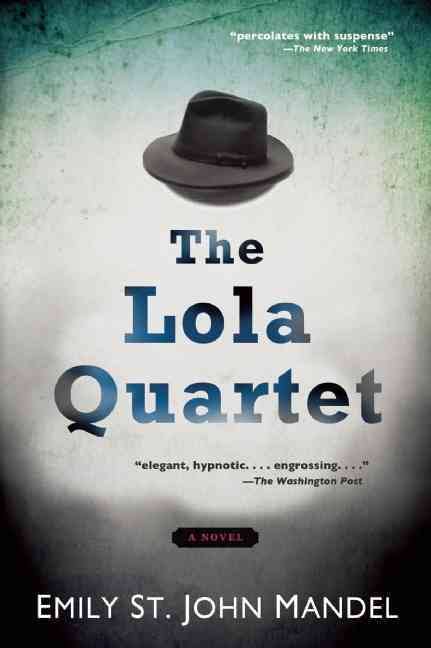
In Emily St. John Mandel’s 2012 literary “thriller” (misnomer though this may be for a novel that is more suspenseful than actively thrilling) a moderately successful reporter finds his life upended when his sister sees a photo of a young girl who looks exactly like him. Haunted by the possibility that he has a daughter he never knew about, Gavin slides into a life of fraud, unemployment, and finally violence. The seeming stability of his life was just an illusion; in fact, it is a net, on which he rested for years but through which he can easily slip.
In this novel, the world of crime and poverty is distinct from, yet terrifyingly close to, the everyday world of law-abiding, middle-class citizens. The stories of Gavin, the other members of the jazz quartet that sustained him in high school, and the girl who disappeared while carrying the mysterious child, weave a tighter and tighter web that draws every character under the surface of the everyday. Mandel shows skillfully how the rest of society maintains itself only through a conspiracy of denial, in which people willfully refuse to see the addictions, abuse, and trauma that hide behind the closed doors of their neighbors’ homes.
The novel, whose prose doesn’t have quite the mature elegance of Mandel’s most recent work, the spare and gripping Station Eleven, doesn’t make its characters round enough to render fully convincing the mysterious self-destructive impulse that propels so many of them. But it is a sensitive, gripping portrayal of how fragile a construction American “normalcy” really is.
 Adversion