Links We Loved This Week — 7/22/16

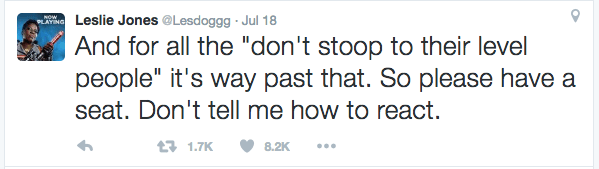
Read the heartbreaking tweets Leslie Jones posted before being chased off Twitter by racist harassment. Vox has a good write-up of the topic, too.

Screen Shot 2016-07-20 at 9.45.37 PM.png

Emily Nussbaum wrote a fantastic piece about Braindead and Mr. Robot. Her analysis of why Braindead succeeds despite its insane-sounding premise is spot on. (via The New Yorker)

Matt Damon did a Reddit AMA in honor of the new Bourne movie. His answers are great — or as one poster amusingly put it, “my boy’s wicked smaht.”

How well do you know Anne of Green Gables? This is a pretty basic quiz, but it should whet your appetite for the planned 2017 revival (and if you get less than 100%, you should probably just go rewatch. Actually, we probably all should).


Beautiful Ruins – Jess Walter

What’s in a font? I first saw this book in our local bookstore and assumed it was being marketed solely to women. It was some combination of the title, with the word “Beautiful” in it; the photographic cover; and the font, a curly script more often seen on Nora Roberts covers.

Continue reading →

Braindead 1×04: “Wake Up Grassroots: The Nine Virtues of Participatory Democracy, and How We Can Keep America Great by Encouraging an Informed Electorate”

Previously on Braindead: Spacebugs, Gareth and Laurel making out, head explosions, Abby infecting Stacie, Gustav reading a lot, Scarlett being weird, Ella getting infected, Luke versus Ella, Laurel investigating the bugs, guys sharing a candy bar, and bugs eating a cat.

Whew. It’s pretty catchy when the guy sings it though.

Continue reading →

Links We Loved This Week — 7/15/16

Heather at Go Fug Yourself posted an absolutely hilarious MST3K-style takedown of Vanity Fair’s dumb, sexist, Australia-stereotype-filled article about Margot Robbie. Don’t even bother reading the original — just read this.

Fun fact: Natalie Portman and Jonathan Safran Foer are longtime pen pals. Fun fact #2: Jonathan Safran Foer uses Hotmail to carry on this literary correspondence. The rest of the article is actually very interesting, but the Hotmail factoid made us laugh so hard. (via Nytimes)

The New Yorker hilariously satirizes all of the awkwardly misogynistic “thinkpieces” about female artists that have been skewered by several other outlets, most comprehensively by AV Club.

If you missed it last week, The Millions rounded up the most anticipated fiction books of the second half of the year. One highlight: the brilliant Michael Chabon is coming out with a new book! This week, they have a corresponding list for non-fiction.

At the Atlantic, read about how researchers have used sentiment analysis to analyze the emotional arcs of stories. It’s amazing how coherently many of the generated graphs hew to classic arcs identified by the researchers. (“Man in a Hole,” for example, sounds pretty much like the one we are all told to write in craft classes: things get worse, then finally they get better.)

Tracy Morgan returned to SNL after his accident last year, and this interview he did with the Times is beautifully emotional.

UnREAL 2×01 “War”: Who Wins the Battle of Oppressions?

What with Hillary Clinton’s perceived “white feminism,” the public reaction to the Bill Cosby rape allegations, and even the Black Lives Matter movement to a certain extent, the intersection between different oppressions is at the forefront of social justice, and not always in a positive way. Hillary Clinton’s election to the White House would be an unqualified win for white, privileged women in the US, while people of color and non-Americans might disproportionately suffer from her more illiberal views on economics, foreign policy, and national security. Similarly, those who called Bill Cosby’s victims attention-seekers were being misogynistic, but many of them were partially reacting to a long and painful history of black men being falsely accused of violating white women. And while Cosby 100% deserved to be publicly shamed and ostracized for raping dozens of women, did he deserve it more than Roman Polanski, or even Woody Allen, both of whom still have relatively thriving careers?

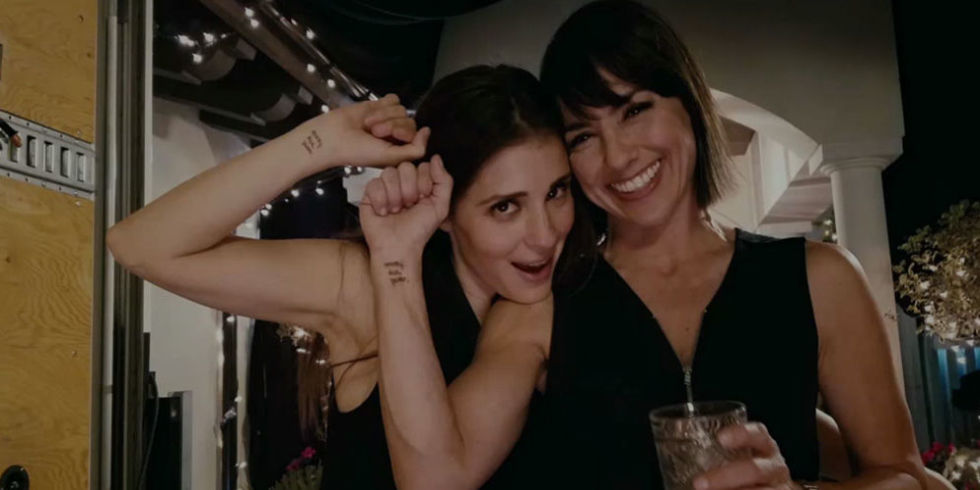
A year ago, I wouldn’t have believed that a Lifetime show would be one of the boldest and most nuanced explorations of these complex (and emotionally fraught) political issues in popular culture right now–but it is. UnREAL has always been a feminist show, which has become all the more explicit in its second season, but now, with the addition of the first black suitor, it’s also tackling racial inequality. And even better, it’s showing us the ways in which feminism and anti-racism interact, and often appear to be incompatible with each other. Continue reading →

Links We Loved This Week — 7/8/16

A few words from Toni Morrison on writing blackness in The Bluest Eye (via The Guardian):

She would not, she decided, try to “explain” black life to a white audience. She would not write from the position of outsider to her own experience. She took issue with, for example, the title of Ralph Ellison’s famous novel, Invisible Man; as she told the New Yorker in 2003, “Invisible to whom? Not to me.”

She wanted to write from within. It was the era of “black is beautiful”; everywhere she looked in New York, the black power movement was promoting that slogan. It struck her both as true – “of course” – and at the same time, ahistorical and reactive. “All the books that were being published by African-American guys were saying ‘screw whitey’, or some variation of that. Not the scholars but the pop books. And the other thing they said was, ‘You have to confront the oppressor.’ I understand that. But you don’t have to look at the world through his eyes. I’m not a stereotype; I’m not somebody else’s version of who I am. And so when people said at that time black is beautiful – yeah? Of course. Who said it wasn’t? So I was trying to say, in The Bluest Eye, wait a minute. Guys. There was a time when black wasn’t beautiful. And you hurt.”

These photos of retired trains are gorgeous and eerie.

Lithub published a conversation between Nicole Dennis-Benn and Chinelo Okparanta, two big new novelists who happen to both be black and LGBTQ. Their conversation is full of wisdom about writing and literature, including the role of race and representation in writing, as in the quotation below from Okparanta:

It seems to me that as writers we do have the right to tell any stories we want to tell. As fiction writers, we can make up anything we want and present it as something akin to fact. This is the power of fiction. But where national politics, racial agendas—those sorts of things—are concerned, it seems to me that we, as writers, should also be conscious of social consequence.

We’re very sad about losing Luke’s crinkly smile, but we agree with THR that by cutting Layla, Nashville is losing its most complex and interesting character, with the most potential for growth (she’s basically season one Juliette). We would also add that Layla finishing her arc as a manipulative, deceitful villain is borderline antifeminist, not to mention that she has the best voice of any actor on that show.


I Have Concerns: Thoughts on Season 4 of The Mindy Project

I’ve never been totally proud of my taste in movies.

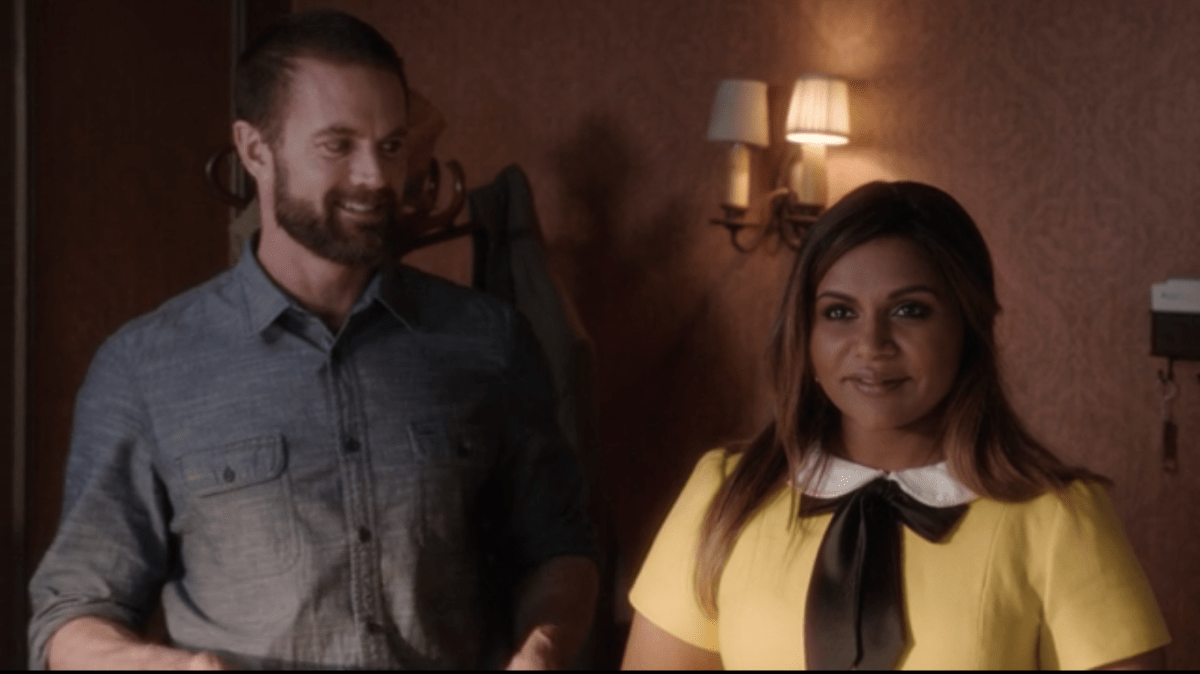
Like Mindy Lahiri, the romantic, detached-from-reality doctor of The Mindy Project, I gobble down every and any romantic comedy I happen to find, always sighing over that second-to-last scene where the two separated lovers stare at each other longingly, waiting for that last scene where the web that keeps them apart finally unweaves.

It’s embarrassing, though. I mean, I’m a modern woman. I have two degrees, I have a professional job, I’m writing a novel on the side, I’ve read Simone de Beauvoir, JD and I clean our apartment together… I’m a card-carrying feminist. I swear. So the rom-coms I come back to over and over again are inevitably limited to a minuscule group in which the sexism is merely an implicit “girls will love this movie because it has a love story in it” confined to the marketing materials, and not the textually explicit “this girl is PATHETIC because all 27 of her friends are married and she isn’t.”

Continue reading →

Links We Loved This Week — 7/1/16

The British Library this week takes a look at WH Auden’s poems.

At We Minored in Film, Kelly Konda ponders the role of the thematically relevant backstory in survival stories.

Chimamanda Ngozi Adichie wrote a delicious piece of what is essentially Virginia-Woolf-inspired fanfiction about Melania Trump for the NYT.

Happy Fourth of July! 12 authors, including Teju Cole and Jay McInerney, picked their essential American books for Time. What would you pick?

21 Times Center Stage: On Pointe Lived Up To Exactly What It Was

Center Stage: On Pointe is a straight-to-Lifetime sequel to the cult hit dance movie of 2000, which is probably most famous for its unhinged final dance sequence, which involved, among other things,  Michael Jackson, awkward sex, and an EPIC costume change. So if you expected that it would be an even more absurd movie than the original, with gloriously nonsensical plot devices, inexplicable directing choices, and satisfying shoutouts to the original, you’re in luck: it was. And here are 21 reasons why.

(Fair warning: if you aren’t a fan of the original, you probably won’t get much out of this post. Or out of the movie itself, to be honest.)

Continue reading →