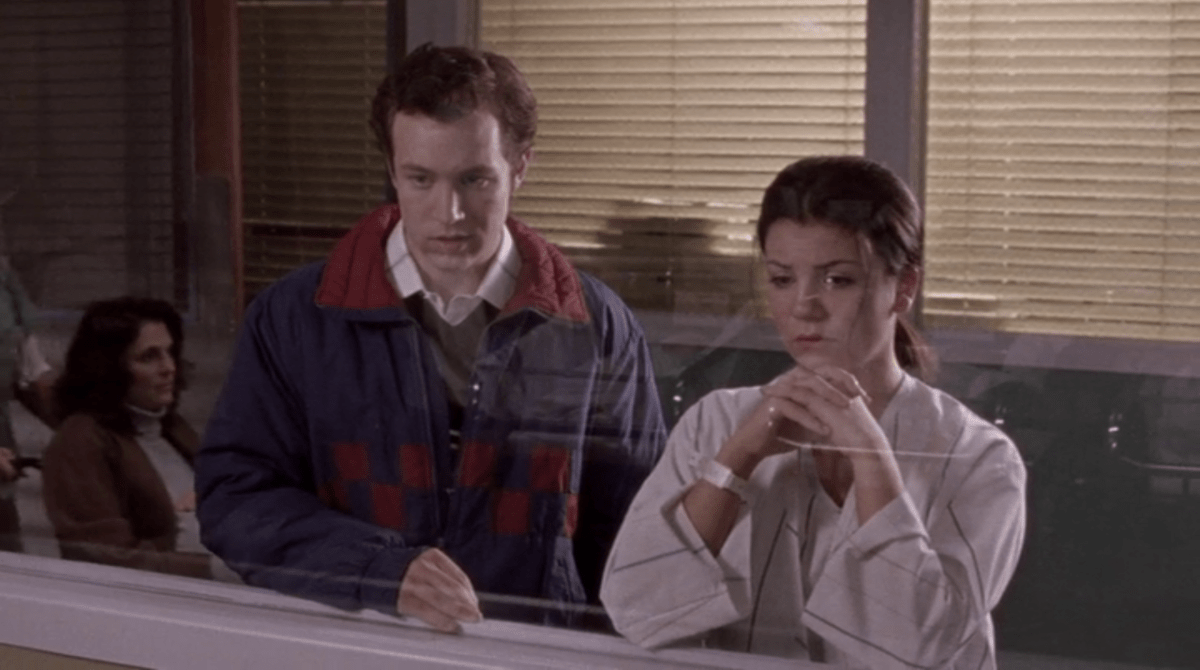
Links We Loved This Week — 1/27/17

Let’s be real. There’s only one thing we’re reading about this week, and it has nothing to do with books or movies or TV. In fact, this creature we are obsessively reading about doesn’t even READ books. A fascinating specimen, isn’t he? (Just ask him!)

Here, inspired by the magic of Google’s auto-complete search box, is a giant collection of listicles: books that the world WISHES Trump would read. Taken together, it is a grand list of books about social justice, science, history, civics, logic, and morality. You know, all those niche topics that he hasn’t really had time to grasp the basics of yet.

Elle has some great, surprising choices, including one about Japanese internment camps. And who knew Ta-Nehisi Coates had written a graphic novel? Not me!

Book Riot has a list of seven, including several great books on racism and, oddly, How to Win Friends and Influence People, like, I think he’s got more influence than he deserves already, mk?

Washington Post went basic (but all strong choices), with Washington, King, and Roosevelt. And the Constitution, though we all know Trump’s not interested in THAT.

NPR went scientific, wishing that Mr. “Let’s just Build Up Our Arsenal” would educate himself on the history and science of nuclear weaponry.

The Washington Independent Review of Books has really good stuff on its list, with War and Peace alongside The Once and Future King, though it’s noticeably short on the “educate Trump about how racism is bad” thing.

Inc.com, somewhat surprisingly, put together a totally legit reading list for our fearless illiterate, including The New Jim Crow, which is amazing and was also on Book Riot’s list.


Links We Loved This Week – 1/13/17

Because of library software that automates purging of unpopular books, these librarians created a fake patron to “save” the unpopular titles they believed were too valuable to be purged. Boing Boing writes, “The problem here isn’t the collection of data: it’s the blind adherence to data over human judgment, the use of data as a shackle rather than a tool.”

There’s a new full trailer for The Good Fight. The trailer is very, “See? Aren’t you glad it’s on CBS: All Access? It has bare butts! And the f-word!” And I’m embarrassed to say it worked on me.

Avid.ly, LARB’s fan blog, argues that Gilmore Girls’ obsession with Clinton was just papering over their Reagan-esque neoliberalism. Fascinating piece.

This little infographic about 11 Disney Princesses whose eyes are literally bigger than their stomachs reminds me of me and my sister’s first act of feminist activism: angry handwritten letters to Disney about their princesses’ unrealistic bodies.


The best books we read in 2016

Janes

Sons and Lovers by D.H. Lawrence

n114498

I’ll be honest: I expected to hate Sons and Lovers. I wanted to finally read D.H. Lawrence for the first time, but a 19th century novel about a young man who is emotionally stunted by his overbearing mother sounded far too pseudo-Freudian for my taste. But I was surprised to find that within the first fifty pages, all of the characters were meticulously drawn at a nearly Jamesian level of psychological nuance, and that the “overbearing mother” was the most sympathetic and fascinating character of the piece. Sons and Lovers is, ostensibly, the story of a young man’s coming-of-age, but really, it’s a story about the fallibility of family bonds, in which they are as fragile yet sticky as strands in a spider web.

Acquired: at a flea market in Iceland, where Sons and Lovers was the only Lawrence novel they had. Continue reading →

Links We Loved This Week — 12/10/16

“A lot of the classic, great stories were written by truly great writers. Joseph Conrad, Edgar Allen Poe, Edith Wharton, Henry James — they wrote what we would now call “genre fiction.” It got me thinking, “What happened?” When did that stop being something you could do and still be considered a serious writer?” Michael Chabon, whose novel Moonglow just came out, talks to Electric Literature about genre fiction.

American Gauntlet, a satire site, published the hilarious “Study Suggests Gilmore Girls Revival Coupled With Political Coverage to Create Wave of ‘Super Disappointment’ for Women.”

Ann M. Martin talks to The New Yorker about feminism in the Babysitter’s Club: “I still wanted to present this idea of girls who could be entrepreneurial, who ran this business successfully, even though they were not perfect.”

The NYT has an excerpt from Anna Kendrick’s book, where she discusses the making of the immortal Camp.

If you want to, you can review one Professor of Paleontology at NYU. Think he is too into his sandwiches? Think his crunchy hair is weird? Think his spray tan is kind of uneven? Share your feelings at Rate-My-Professor. “Looks a bit like this super chill dude who used to sell cookies outside the dorms a few years back… or am I confusing him with the falafel guy?”

Shelter in Place – Alexander Maksik

Joseph March, the hero of Alexander Maksik’s novel Shelter In Place, has two problems: tar, and a bird. The tar is the black, creeping heaviness of his depression, which comes along with periods of mania; the bird is the painful part, the part that pierces his chest. He has bipolar disorder (or rather has something unnamed that, with its cycles from up to down, resembles it), and he’s constantly haunted by his own, inexplicable, internal rhythms of pain and joy. Alexander Maksik has lit upon a perfect metaphor for severe depression.

Continue reading →

Westworld Recap: 1×09 “The Well-Tempered Clavier”

Previously on Westworld: A lot, like a LOT. Dolores and William got captured by Logan (the artist previously known as Goofus) and his buddies. Dolores and Bernard, apparently, were secretly conversing about her changes in consciousness. Bernard was mad when Ford got him to kill Theresa. Teddy remembered about Ed’s whole thing with Dolores and punched him, but then some blonde woman (Angela, according to the closed captions, not that they ever say it, with this show’s typical blissful lack of attention to such details) stabbed him with an arrow and told him Wyatt, the big baddie, needed him. Maeve got Lutz to help her get magical powers over other hosts, and she planned to recruit an army. Ed confessed that he had once killed a version of Maeve, and meanwhile, Maeve stabbed the new Clementine for no apparent reason. Also, there was a maze, dunno if you caught that. It’s kind of a big deal.


Continue reading →

Links We Loved This Week — 11/4/16

Watch Pixar’s adorable short about a baby sandpiper learning to find food: Piper.

The Beauty and the Beast pictures out on EW this week are ridiculously exciting for us.

At LA Review of Books‘ blog Avidly, there is a great piece on why Madame Merle is appealing to contemporary feminism. (To be clear, we are still Team Archer, all the way.)

The cast of Girls performed Emily Doe’s powerful essay about sexual assault in honor of her Woman of the Year award:

In Seven Seasons, Gilmore Girls Never Said the Word “Abortion”

When Gilmore Girls came out in 2000, young women were in desperate need of positive female role models. In an era when society designated the explicitly post-feminist Ally McBeal as the show that best articulated the internal conflicts of women (it didn’t), Lorelai and Rory Gilmore were godsends. Intelligent, funny, quick-witted, independent, well-read, and wholly original, they fulfilled a hunger for well-rounded female characters who had their own dreams, goals, and opinions separate from the men in their lives.

The groundbreaking nature of the main characters and the focus on female relationships made one uncomfortable fact much easier to miss: Gilmore Girls is not particularly feminist. It might be considered feminist for the time period, when stacked against actively misogynistic shows like Ally, but on the whole, it doesn’t even achieve the “flawed but as feminist as we could expect for the time” status, like Buffy the Vampire Slayer. It had a disquieting penchant for gay panic, slut-shaming, and casual racism (which I will explore in depth in another post), and when it wasn’t being politically incorrect, it was often pointedly apolitical. Case in point: Gilmore Girls is a show about teen motherhood that literally never utters the word “abortion.” Continue reading →

“Don’t Breathe” and the Power of Women

In a disappointing summer for movies, and especially genre movies, Don’t Breathe is a refreshing change of pace (I refuse to say “breath of fresh air”). It’s innovative, elegant, pleasingly nasty, and most of all subversive, when too many recent horror movies are all-too-familiar.

Critics have agreed that one of the film’s biggest selling points is its ability to subvert horror tropes in simple yet effective ways. It’s a home invasion movie in which the invaders are terrorized rather than the other way around. It stars a blind man who isn’t a victim or a wise sage, but a bad-ass ninja. It defies expectations at every turn–with one notable exception.

HUMONGOUS SPOILERS FOLLOW!

Continue reading →