Unknown's avatar

Posts by Nerdy Spice

http://advers.io Formerly "kht" I grew up playing Disney-movie-based games with my baby sister. I majored in English in college, got a graduate degree in creative writing, and then found myself earning a living as a software engineer. I'm working on my second novel and querying agents for my first. I eats home-cooked meals only when my husband Keets makes them for me, and he is still trying to teach me how to turn on the oven. Interests: Victorian novels, modern MFA novels and I'm not ashamed of it, super-long novels that aren’t by David Foster Wallace, Michael Chabon, Claire Messud, Henry James, feminism, movies with Robert Downey Jr. in them, TV shows with Connie Britton in them, Pacey Witter, 90s teenybopper movies with training montages, The Good Wife, Homeland, Tina Fey’s entire oeuvre, Mindy Kaling’s entire oeuvre, shows from the WB/CW circa 2004, and JJ Abrams.

Links We Loved This Week — 12/16/16

He was wonderful on Growing Pains, but let’s also take a moment to remember how funny Alan Thicke was on How I Met Your Mother:

Nashville premieres on January 5th on CMT. Connie Britton gives an interview with the New York Times where she is way more honest than you’d usually expect an actress to be, candidly evaluating the past few seasons of Nashville as being too soapy (which… I think was part of the pleasure of it). There’s also a bit where she talks about not having gotten into the business as a “beauty queen” and thus not having to freak out about aging (she’s 49), which is amusing because I think many people think of her as one of the most beautiful actresses out there, and that has only increased as she’s aged, rather than decreased.

Emmy Rossum’s fight for pay equity on Shameless was successful. Love what William H. Macy had to say in her support, too! (via Vogue)

Links We Loved This Week — 12/10/16

“A lot of the classic, great stories were written by truly great writers. Joseph Conrad, Edgar Allen Poe, Edith Wharton, Henry James — they wrote what we would now call “genre fiction.” It got me thinking, “What happened?” When did that stop being something you could do and still be considered a serious writer?” Michael Chabon, whose novel Moonglow just came out, talks to Electric Literature about genre fiction.

American Gauntlet, a satire site, published the hilarious “Study Suggests Gilmore Girls Revival Coupled With Political Coverage to Create Wave of ‘Super Disappointment’ for Women.”

Ann M. Martin talks to The New Yorker about feminism in the Babysitter’s Club: “I still wanted to present this idea of girls who could be entrepreneurial, who ran this business successfully, even though they were not perfect.”

The NYT has an excerpt from Anna Kendrick’s book, where she discusses the making of the immortal Camp.

If you want to, you can review one Professor of Paleontology at NYU. Think he is too into his sandwiches? Think his crunchy hair is weird? Think his spray tan is kind of uneven? Share your feelings at Rate-My-Professor. “Looks a bit like this super chill dude who used to sell cookies outside the dorms a few years back… or am I confusing him with the falafel guy?”

Shelter in Place – Alexander Maksik

Joseph March, the hero of Alexander Maksik’s novel Shelter In Place, has two problems: tar, and a bird. The tar is the black, creeping heaviness of his depression, which comes along with periods of mania; the bird is the painful part, the part that pierces his chest. He has bipolar disorder (or rather has something unnamed that, with its cycles from up to down, resembles it), and he’s constantly haunted by his own, inexplicable, internal rhythms of pain and joy. Alexander Maksik has lit upon a perfect metaphor for severe depression.

Continue reading →

Westworld Recap: 1×09 “The Well-Tempered Clavier”

Previously on Westworld: A lot, like a LOT. Dolores and William got captured by Logan (the artist previously known as Goofus) and his buddies. Dolores and Bernard, apparently, were secretly conversing about her changes in consciousness. Bernard was mad when Ford got him to kill Theresa. Teddy remembered about Ed’s whole thing with Dolores and punched him, but then some blonde woman (Angela, according to the closed captions, not that they ever say it, with this show’s typical blissful lack of attention to such details) stabbed him with an arrow and told him Wyatt, the big baddie, needed him. Maeve got Lutz to help her get magical powers over other hosts, and she planned to recruit an army. Ed confessed that he had once killed a version of Maeve, and meanwhile, Maeve stabbed the new Clementine for no apparent reason. Also, there was a maze, dunno if you caught that. It’s kind of a big deal.


Continue reading →

Links We Loved This Week — 12/3/16

This week in media, everyone has an opinion on Gilmore Girls! Here are a few of the best we’ve read, and stay tuned–we’ll be putting up a few opinions of our own here. There seems to be just one thing everyone can agree on: Fat-shaming sucks.

At Vox, Aja Romano makes a compelling argument that Stars Hollow, or maybe the show itself, is in the business of destroying women’s potential.

The Atlantic thinks Rory is a horrible journalist, and we have to agree.

At The New Yorker, Betsy Morais views Rory as a case of arrested development.

Duana at Lainey Gossip bucks the trend, arguing that Rory isn’t that bad.

At Vulture, Amy Sherman-Palladino explains why A Year in the Life ends just before the election: because they didn’t have the budget to show what happens when the actual devil takes over the world. Hee!

At Vanity Fair, Laura Bradley makes the argument that Emily is the real protagonist. I don’t know about that, but she is certainly a delight.

Amy Sherman-Palladino says in her first post-revival interview that Rory doesn’t have to go through with [SPOILER], although from context clues, that seems a little disingenuous.

Westworld Recap: 1×08 “Trace Decay”

Previously on Westworld: The man in the black hat was looking for a maze, with Teddy, who was looking for Dolores, who was looking for a place from her dreams, with William, the artist formerly known as Gallant. Theresa and Charlotte faked a problem with Clementine, which led to Bernard being fired; Maeve tried to force Lutz and Sylvester to help her escape; Bernard turned out to be a secret robot, and Ford had Bernard kill Theresa. Also—not that anyone cares about this—Elsie disappeared.

Ford brings Bernard online, down in the secret lab. Bernard is being quite emotive for Bernard, breathing heavily and crying softly. “What have I done?” he wails. Ford, rather cold-heartedly, says only that he thinks Bernard’s fake emotions are very impressive, since he was the author of many of them. The human engineers couldn’t create complicated emotions, so Ford built Bernard to do it. Bernard pleads that he loved Theresa, and Ford says that one man’s life or death was a small price to pay for the “knowledge that I sought, the dominion I should acquire.” Not that Theresa’s was a man’s life, but Ford is obviously not very interested in feminism. Bernard yells that he’s not going to help Ford, and he’s going to raze this place to the ground. It’s quite a change from his usual diminished affect. Ford, of course, freezes him just as he overturns his chair. “I don’t need a simulacrum of an emotionally ruined man,” he comments. He just wants Bernard to cover his own tracks. Bernard puts his glasses on and asks Ford calmly how he’d like him to proceed.

Continue reading →

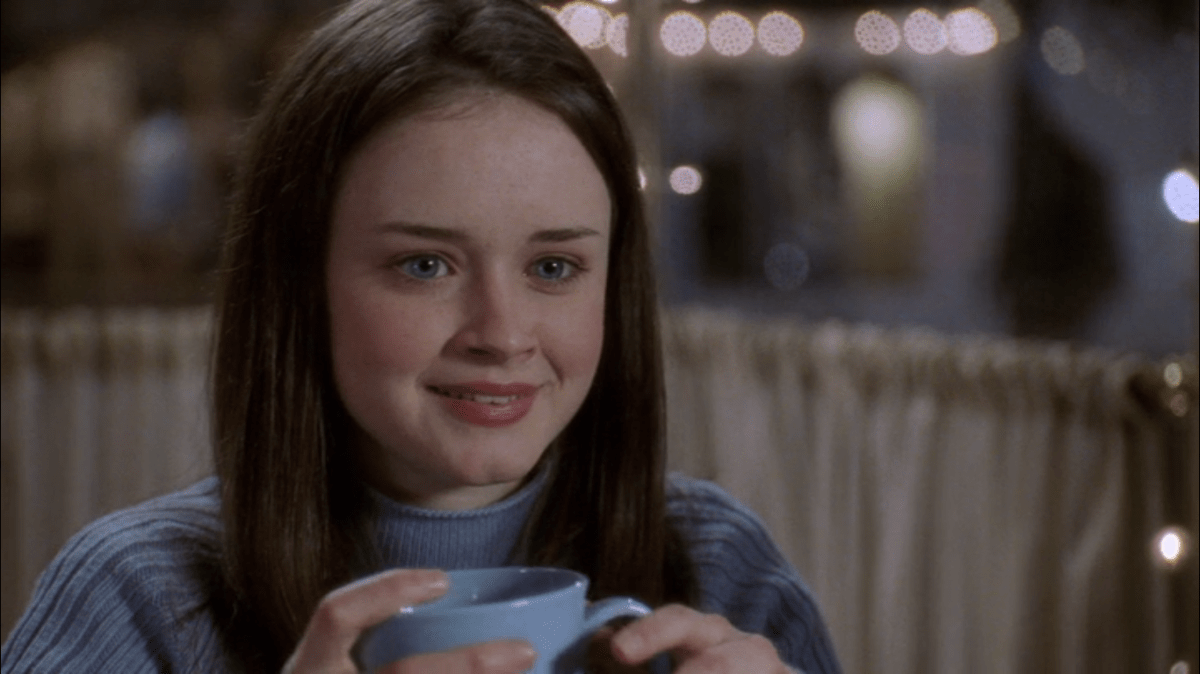
Rory holds a cup of coffee.

Rory’s Boyfriends: The Patented Rory Gilmore Pro-Con List

By Nerdy Spice and Janes

It’s time, guys. We need to settle this question once and for all before the revival comes out tomorrow, so that we know who to root for: Dean? Jess? Logan? Only a Rory Gilmore-style pro-con list — weighted according to their importance so that this process remains extremely mathematical and objective — can tell us.

Continue reading →

Westworld Recap: 1×07 “Trompe L’Oeil”

Previously on Westworld: A tarot reader told Dolores to follow the maze, and she shot some people to rescue Gallant; she and Gallant hopped a train with El Lazo; Bernard found out that Ford was maintaining a creepy house full of hosts that were replicas of his childhood family; the board sent a representative to the park; Ford threatened Theresa; Elsie found out that Theresa was smuggling data out of the park, and found out that the hosts might be able to hurt humans; Maeve threatened Lutz and his obnoxious red-headed pal; and Elsie got abducted in a creepy old maintenance station in the park, after agreeing to meet Bernard in his office.

No one on the show seems to give a shit about the Elsie thing, by the way. I think that’s the funniest part of this episode, like, this woman has been kidnapped in the park after making plans to meet up with Bernard, and everyone basically forgets that she exists. This poor woman has probably had her life essence sucked out for one of Arnold’s crazy experiments, and literally no one cares! They’re probably relieved honestly… she’s sort of a pain in the neck.

Continue reading →

Westworld Recap: 1×06 “The Adversary”

In the wake of the US elections, I almost didn’t bother writing this recap. TV, art, and criticism seem too frivolous and ephemeral to be interesting when you’re living in a country that is in the throes of a spectacular crisis. But Westworld is a perfect example of why art still exerts a claim on our attention, even in the midst of catastrophe. It’s a show about people indulging their darkest impulses towards women, knowing there will be no consequences for doing so. What could be more relevant to confronting the reality of the new American president-elect?

With that—to the races.

Continue reading →

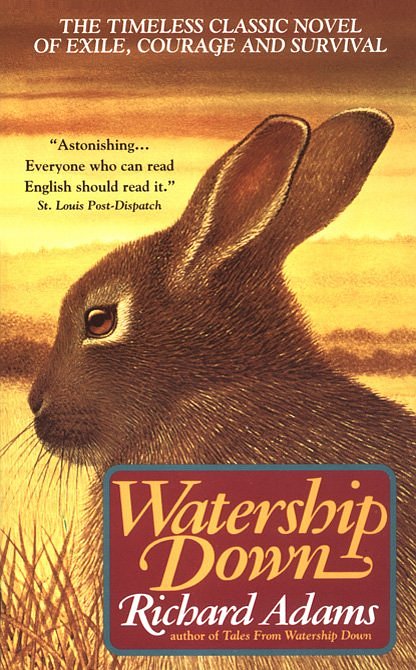
Rereading Watership Down In the Age of Terrorism and Trump

Someone once asked me, if I could force everyone on earth to read one book in order to make the world a better place, what book it would be. The answer was easy, and it’s only gotten easier with time: Watership Down, Richard Adams’ epic novel about bunny rabbits (seriously), the extravagantly tattered paperback I’ve read over and over since I was nine, following a group of rabbits as they travel to a new home and found a new society. It’s purportedly for children, though Adams makes no perceptible effort to simplify his prose for younger readers; and anyway, lately it seems like Americans could use a grade-school-level lesson in civic values. Suddenly so many of us seem willing to trade away long-standing principles of democracy in exchange for a false sense of security from terrorism, or from the imaginary Mexican rapists supposedly pouring over the border. Those principles are so interwoven in the fabric of our daily life that it’s easy to take them for granted; rereading Watership Down always reminds me what a struggle it is to shape a healthy society out of chaos.

Continue reading →