Braindead 1×09: “Taking on Water: How Leaks in D.C. Are Discovered and Patched “

Recap

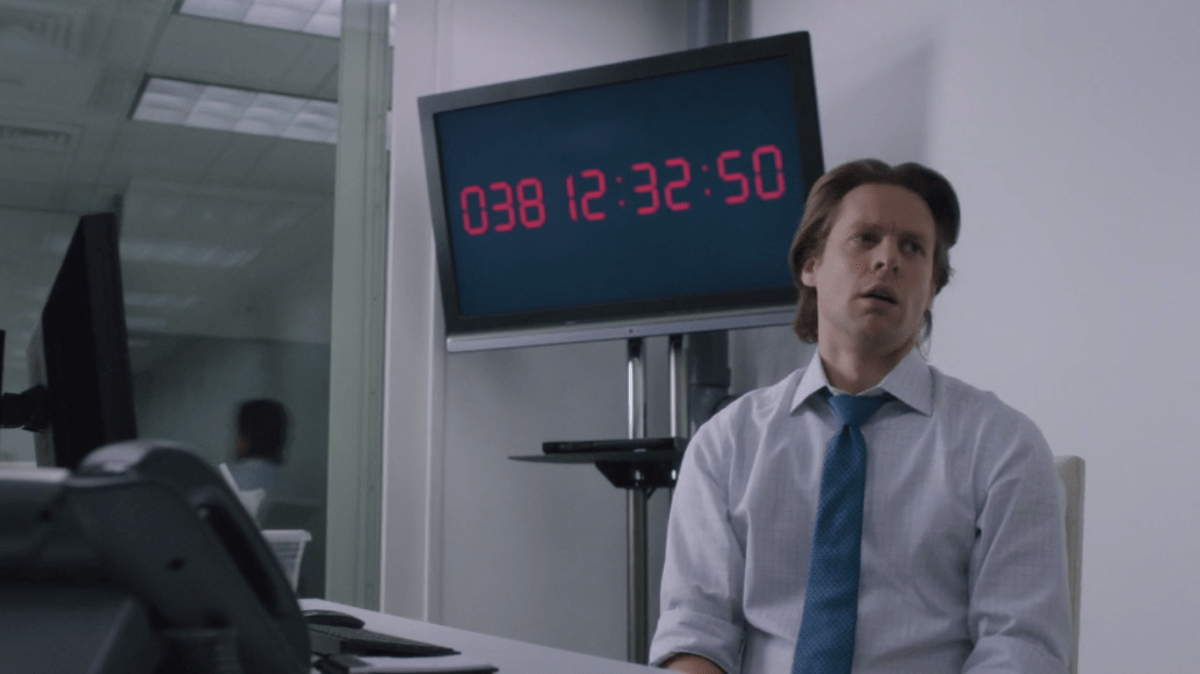
Previously on Braindead: This week’s previouslies are purportedly sung by Jonathan Coulton’s ghost after he was attacked by spacebugs and his head exploded. I hope this doesn’t mean that he won’t be singing the previouslies anymore! (Unless he’s handing off singing duties to Aaron Tveit, in which case: so long, Jonathan.) So yeah, anyway, Rochelle and Gustav tied up Bug-Man Kevin and followed him to a secret room, and then there was a whole thing where fake Syrian witnesses were used to try to convince Senators to vote for war. And re: Ella and Wheatus, Jonathan Coulton’s ghost agrees with us that “The way they get it on is the most disgusting thing I’ve ever seen.”

Continue reading →

Links We Loved This Week — 8/19/16

Heather Havrilesky, who writes the fabulous “Ask Polly” columns at NYMag, interviews Winona Ryder and discusses the pathologization of female emotion.

Even if the phrase “fag hag” is so 1999, you won’t care while you’re reading this absurdist ranking of the Top 10 Fag Hags of Henry James. (via LA Review of Books)

As, it seems, always, McSweeney’s lit crit is killing it: Quiz: Are you an unlikable female narrator?

Idiocracy director tells The Daily Beast why his movie has become a documentary.

Freud has a field day as the “subtle” metaphors of the James Bond credits are revealed (via Slashfilm).

Links We Loved This Week — 8/5/16

An in-depth analysis of Watchmen and the conundrum of “adapting the unadaptable”:

The Establishment has a comprehensive survey of the history and evolution of queer YA literature (by an eighteen-year-old who can already write circles around most of the older writers on the internet). Want to know exactly when people stopped killing off their LGBTQ queer love interests (or at least stopped doing it as often)? Read to find out!

THR‘s rare interview with on and off-screen couple Keri Russell and Matthew Rhys, which includes interesting analysis on the flipping of gender roles in The Americans and Rhys joking that real-life Keri Russell “doesn’t have the ice of Elizabeth — though sometimes she does.”

The hilariously terrible Suicide Squad has yielded some amusing zingers, from Forbes calling it “an all-out attack on the whole idea of entertainment” to SFGate describing it as “two hours of soul-sickening torment.” But the harshest indictment of our current blockbuster season comes from Indiewire, who says that between Suicide Squad, Jason Bourne, Independence Day: Resurgence, X-Men: Apocalypse, Warcraft, and more, “this is what plays in the multiplex in Hell.”

The New Ghostbusters Fight Ghosts and Entitled Angry Men

In the opening sequence of the new Ghostbusters movie, the inimitably funny and awkward Zach Woods plays a haunted house tour guide who cynically trips a secret mechanism to make it look like the ghost in the basement has knocked something to the floor. But one night when he locks up, he finds out the ghost in the basement might not just be an invention to sell tour tickets. Near the end of the (admittedly kind of scary) sequence, he realizes he’s run to the exact wrong place and says to himself what we all want to say to the characters in every scary movie at least once: You’re Such an Idiot.

Continue reading →

Links We Loved This Week — 7/22/16

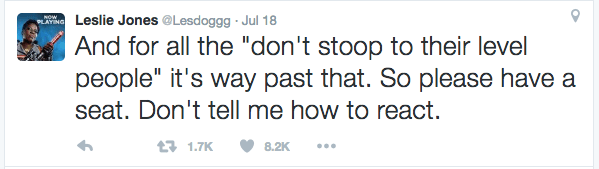
Read the heartbreaking tweets Leslie Jones posted before being chased off Twitter by racist harassment. Vox has a good write-up of the topic, too.

Screen Shot 2016-07-20 at 9.45.37 PM.png

Emily Nussbaum wrote a fantastic piece about Braindead and Mr. Robot. Her analysis of why Braindead succeeds despite its insane-sounding premise is spot on. (via The New Yorker)

Matt Damon did a Reddit AMA in honor of the new Bourne movie. His answers are great — or as one poster amusingly put it, “my boy’s wicked smaht.”

How well do you know Anne of Green Gables? This is a pretty basic quiz, but it should whet your appetite for the planned 2017 revival (and if you get less than 100%, you should probably just go rewatch. Actually, we probably all should).


UnREAL 2×01 “War”: Who Wins the Battle of Oppressions?

What with Hillary Clinton’s perceived “white feminism,” the public reaction to the Bill Cosby rape allegations, and even the Black Lives Matter movement to a certain extent, the intersection between different oppressions is at the forefront of social justice, and not always in a positive way. Hillary Clinton’s election to the White House would be an unqualified win for white, privileged women in the US, while people of color and non-Americans might disproportionately suffer from her more illiberal views on economics, foreign policy, and national security. Similarly, those who called Bill Cosby’s victims attention-seekers were being misogynistic, but many of them were partially reacting to a long and painful history of black men being falsely accused of violating white women. And while Cosby 100% deserved to be publicly shamed and ostracized for raping dozens of women, did he deserve it more than Roman Polanski, or even Woody Allen, both of whom still have relatively thriving careers?

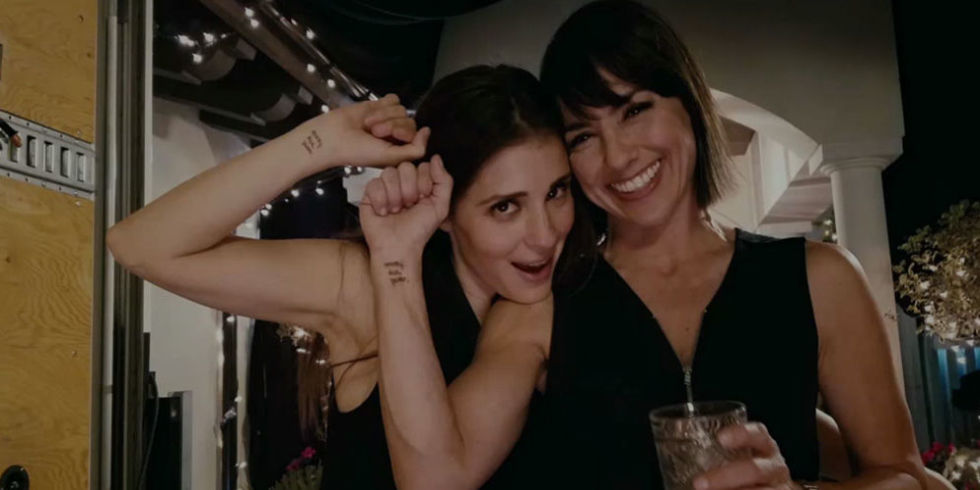
A year ago, I wouldn’t have believed that a Lifetime show would be one of the boldest and most nuanced explorations of these complex (and emotionally fraught) political issues in popular culture right now–but it is. UnREAL has always been a feminist show, which has become all the more explicit in its second season, but now, with the addition of the first black suitor, it’s also tackling racial inequality. And even better, it’s showing us the ways in which feminism and anti-racism interact, and often appear to be incompatible with each other. Continue reading →

I Have Concerns: Thoughts on Season 4 of The Mindy Project

I’ve never been totally proud of my taste in movies.

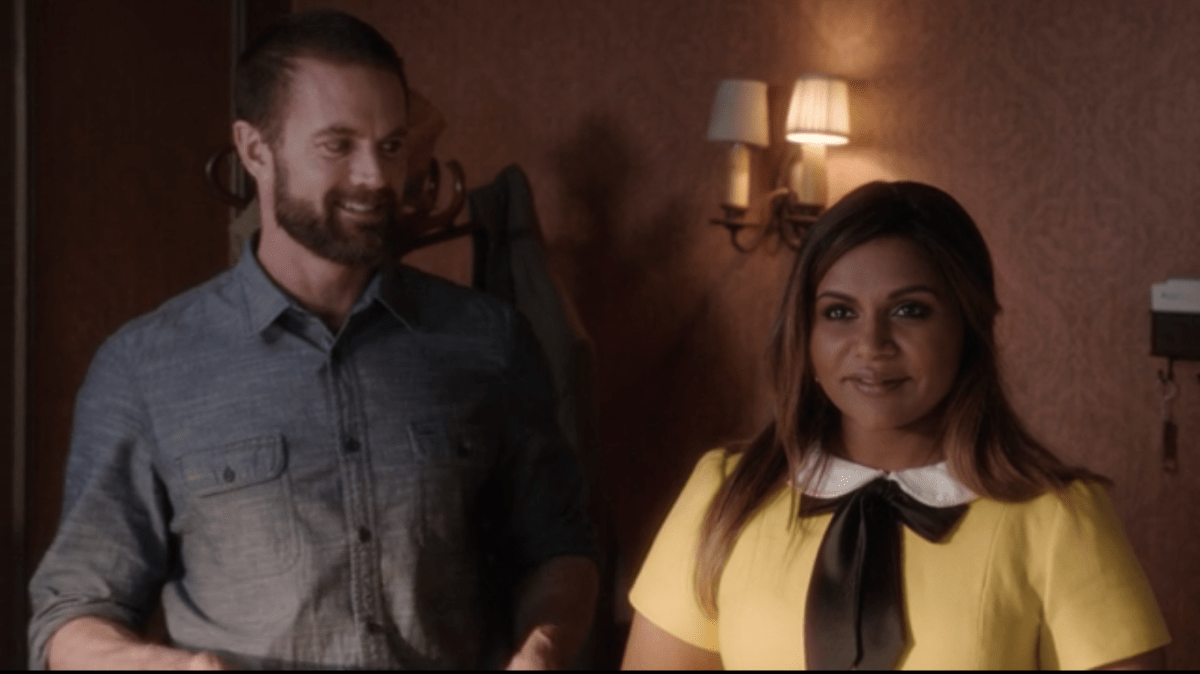
Like Mindy Lahiri, the romantic, detached-from-reality doctor of The Mindy Project, I gobble down every and any romantic comedy I happen to find, always sighing over that second-to-last scene where the two separated lovers stare at each other longingly, waiting for that last scene where the web that keeps them apart finally unweaves.

It’s embarrassing, though. I mean, I’m a modern woman. I have two degrees, I have a professional job, I’m writing a novel on the side, I’ve read Simone de Beauvoir, JD and I clean our apartment together… I’m a card-carrying feminist. I swear. So the rom-coms I come back to over and over again are inevitably limited to a minuscule group in which the sexism is merely an implicit “girls will love this movie because it has a love story in it” confined to the marketing materials, and not the textually explicit “this girl is PATHETIC because all 27 of her friends are married and she isn’t.”

Continue reading →

Every Scene in The Neon Demon Should Have Looked Like This

Nicolas Winding Refn’s The Neon Demon is an irreproachably beautiful movie, which is problematic when making a movie about beauty. Ostensibly the movie decries objectification of beautiful women, while the cinematography enhances it, to the point that any feminist critique is rendered inert at best and hypocritical at worst. Continue reading →

A Fundamental Misunderstanding of Tess of the D’Urbervilles

Tess is just a humble milkmaid when the local landowner has his wicked way. Her new beau, the smarmy Angel Clare, is none too pleased when he finds out she’s already been deflowered. What is a girl to do? Bloody revenge of course, and an ending to touch the hardest of hearts.

Pulp! The Classics is an inspired idea. Who wouldn’t want to read irreverent re-tellings of classic literature that highlight their universal–and therefore, potentially lowbrow–themes? After all, with slightly different execution, Hamlet is just a revenge story, The Great Gatsby is just a crime thriller, and Alice’s Adventures in Wonderland is a forebear to Pineapple Express.

And maybe one could argue that this Tess of the D’Urbervilles cover proves a similar theorem: without Hardy’s sensitive and socially conscious artistry, Tess is nothing more than exploitative erotica. But this cover isn’t just oversimplifying the book’s themes, as the other covers in the series do; it’s actively (and offensively) reversing them. “She’s no angel”?? Tess is about a compassionate, highly moral young woman who is raped, loses her child, and is unfairly ostracized (and then executed) as a result of hypocritical Victorian sexual mores. The subtitle of the novel is “A Pure Woman Faithfully Presented.” It takes its name from “the D’Urbervilles”–the noble name Tess’ father vainly tries to appropriate for their family–rather than her actual name, Tess Durbeyfield, because she possesses nobility in spite of her social standing. The entire point of the book is that she is a goddamn angel, in all the ways that count.

Links We Loved This Week — 5/20/16

Katherine Dunn, author of Geek Love, died last week, so this is a bit late, but Vogue reprinted a magnificent essay by Dunn on the bad girl. “Women who pay their own rent don’t have to be nice,” Dunn wrote. “They can afford to be real.”

The Belle Jar has A List Of Things In Literature, Music and Art That Are Actually Metaphors For Women, including “The sea is a good metaphor for women because it’s always wrecking shit that men love” and “Look, I don’t know who decided that cats are feminine and dogs are masculine, but someone did and that idea has stuck and now we all just have to live with it.”

At LA Review of Books, Graham Daseler writes about whether there has ever been a truly great Hollywood Novel.

The Times Literary Supplement writes about the benefits of pretentiousness: “cultural eclecticism, and an attendant willingness to take risks even if it makes one look foolish or over the top, has always been an essential driving mechanism in the arts.”