Why I Loved The Good Wife Finale: Recap & Review

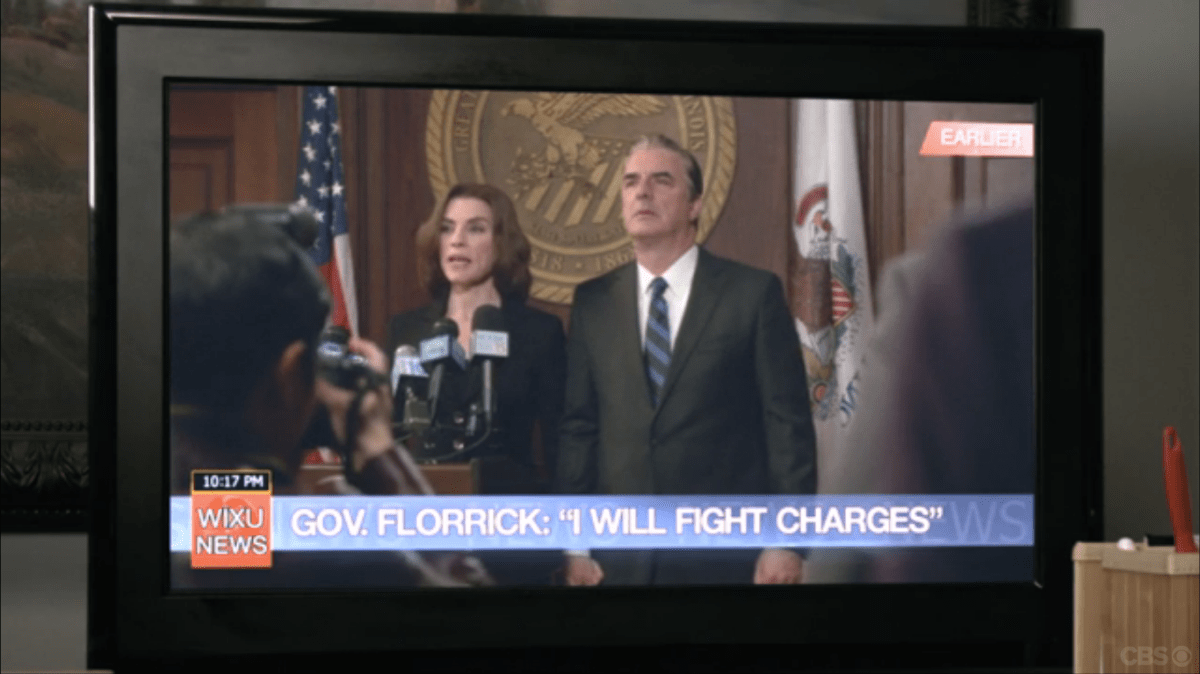
This is it! In its final episode, The Good Wife rose out of the ashes of a mess of a season and grasped at the character-driven brilliance it had in its heyday. Before that, it attempted to make sense of a character whose contradictions, changes, and choices were opaque to her and wonderfully complex on screen.

I’ll recap it, then follow up with final thoughts—a farewell to this flawed masterpiece of a show.

Continue reading →

When Men Write Women: Success Stories

I think of a man, and take away reason and accountability.

Jack Nicholson, As Good As It Gets

I’ve had dozens of moments when I’m reading an otherwise great book and a woman says something, or does something, that jolts me out of the world I’ve been inhabiting and reminds me that the author has his own particular notions of women, and not necessarily correct ones. From female characters who fulfill some male fantasy of what women should be like (hot, mostly), or who have no depth at all beyond their looks, to those who have one highly stereotypical personality trait whereas male characters are fully-rounded: the sins committed by authors of all stripes against female characterization are varied, and unfortunately, still frequent.

Sometimes it seems that the feminist internet has rightly given up on even encouraging men to write women at all; if we want a great female character, we assume we’ll need to read Chimamanda Adichie, Willa Cather, Claire Messud. But every once in awhile, a gifted male writer will come along who has an understanding of the unique power structures that affect women, but also is capable of infusing the same vision of humanity into his female characters as he does into his male characters. Here are a few of my favorite female characters written by men. Comment below to share your favorites! (Or to rant about the worst failures. We love rants here at Adversion.)

Aaliyah Saleh, An Unnecessary Woman – Rabih Alameddine

The inspiration for this post, Aaliyeh is the mid-seventies woman with blue hair who narrates Rabih Alameddine’s novel.

Continue reading →

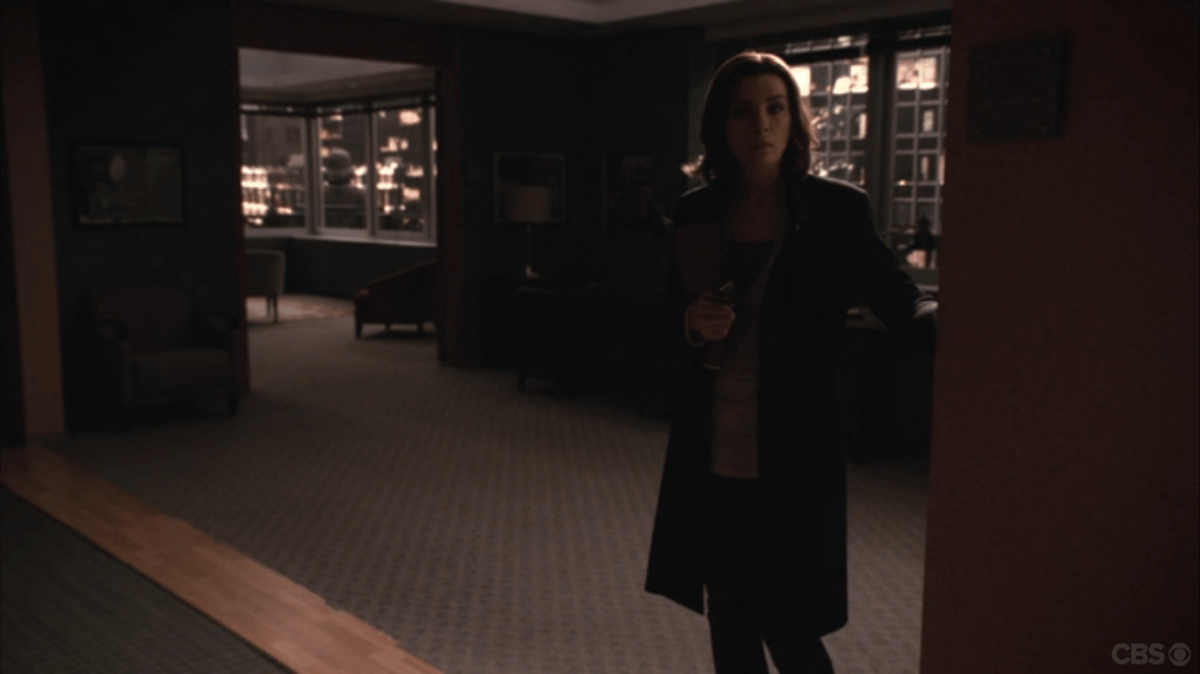
The Good Wife Recap: 7×19 “Landing”


We ended last week’s episode on what was supposedly a cliffhanger, but if you were looking forward to seeing the resolution of that big question (will Alicia wait to divorce Peter till after his legal troubles are over) happen onscreen, you’ll be disappointed.

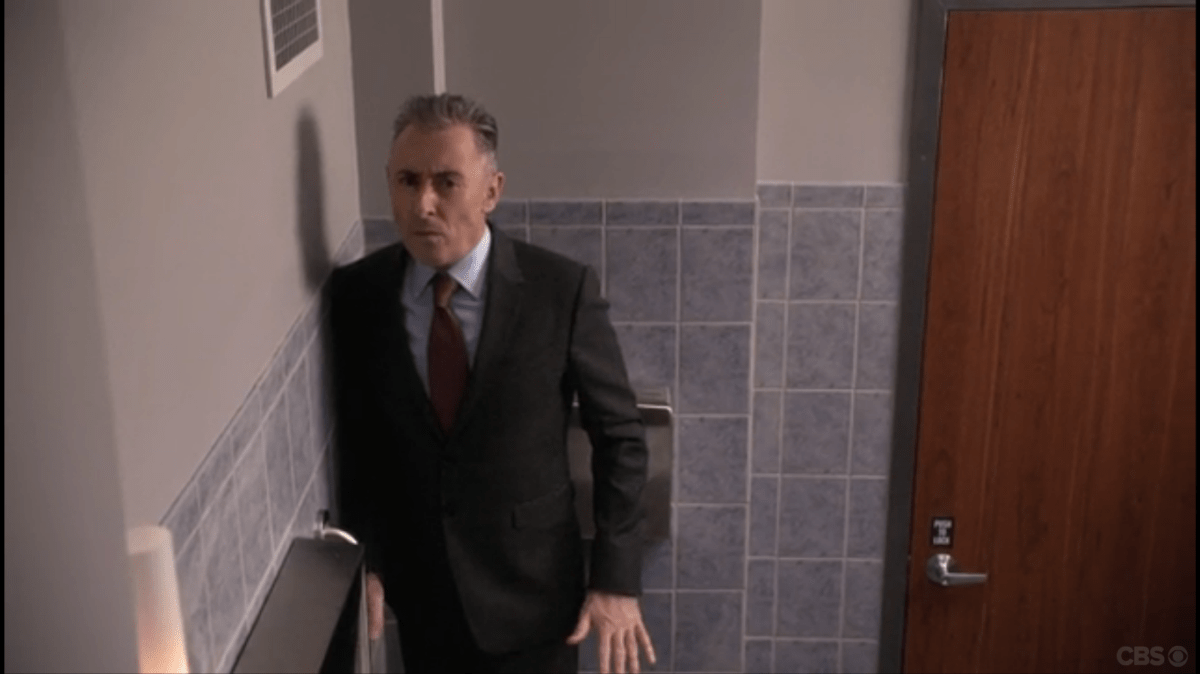
That said, this episode finally zoomed up to full speed and delivered a whole bunch of major plot developments. I also had the privilege of seeing this screened with a large and very engaged audience at the Tribeca Film Festival (my write-up is here), which made it really fun.

Continue reading →

Nashville Recap: 4×12 “How Does It Feel to Be Free”

Previously on Nashville: Erin and Gunnar were casual and announced this fact ad nauseam. Rayna signed Maddie and Daphne to Highway 65. Luke owed the government forty million dollars, which was secretly a positive development for him because it caused Gabriella to dump him and stop sucking away all of his moral and spiritual life force. Colt saw Jeff saving Juliette and told Layla that was what killed him. Layla got the Crazy Eyes and asked Glenn to be her manager and made him ask Avery to produce for her. And Avery didn’t want to lie for Juliette anymore.

Oh, and Rayna and Deacon got married after what looked like it might be a serious problem (both Maddie and Tandy’s legitimate concerns about Deacon’s demons, and Daphne’s even more legitimate concern that no one actually cares about her) but ended with the cheapest, fastest resolution ever, in which Rayna sat her kids down for about four seconds, promised them there was nothing to worry about, and convinced them, presumably with the power of her hair, to shut up. We’ll be recapping that one, but we fell behind, so just trust us if you haven’t seen it… it was absurd, and the previouslys wisely don’t bother going into it.

Avery busts into the treatment center and asks for Juliette with a look of barely controlled passion. Any relation? asks the receptionist. “I’m her husband,” he announces dramatically.

Continue reading →

“Faustine” by Algernon Charles Swinburne

You have the face that suits a woman
      For her soul’s screen —
The sort of beauty that’s called human

      In hell, Faustine.

The meaning of the name Faustine is “made of the stuff of Faust,” just as Eve was made from the rib of Adam and Pandora at the hands of Hephaestus. By Swinburne’s own admission, Faustine’s unearthly beauty signals a missed opportunity for exaltation, a gift she squanders “to waste the loves and ruin the lives of men.”
The poem is concerned with one central idea, he says:

“…the transmigration of a single soul, doomed as though by accident from the first to all evil and no good, through many ages and forms, but clad always in the same type of fleshly beauty.”

And she has taken many forms through the ages, both in mythology and in literature. The gorgeous Faustine who is caressed by dishonest serpents and receives “flower of kisses without fruit of love”–she could be Daisy Buchanan, or Rosamond Vincy, or even Lily Bart. The awareness that beautiful, hollow monsters are made, not born, varies in each of these works, but there is virtually none in Swinburne’s (otherwise quite moving) poem.
You seem a thing that hinges hold,
      A love-machine
With clockwork joints of supple gold —
      No more, Faustine.

The Good Wife Recap: 7×16 “Hearing”

Y’all probably know if you’ve read our other recaps that I will wholeheartedly approve of anything that involves Stockard Channing. She’s back in this episode—and so is our long-lost Owen! Hi, Owen—and I have to admit, all the shenanigans made me laugh as hard as I ever have at this show.

But were there, perhaps, too many shenanigans and not enough actual stuff? (Objection: leading question.)

 Previously on The Good Wife: Alicia and Jason made out. Cary and David Lee started running around like chickens with their heads cut off because they had developed a group hallucination that there was such a thing as an “all-female firm” and that Diane wanted to be that thing. Peter was in legal trouble, and it probably had to do with a rich donor, not with his vote-rigging, and thenceforth became boring to me. Elsbeth was brilliant yet unhinged and had an equally brilliant yet unhinged ex-husband. Oh, and there was this guy named Will Gardner who we have to try not to think about, in order to take seriously Alicia’s attraction to Jason. (By the way, I SAW JOSH CHARLES ON THE STREET THE OTHER DAY. It was everything.)

Continue reading →

Beauty is a Wound – Eka Kurniawan

So she let her stomach get bigger and bigger, held the selamatan ritual at seven months, and let the baby be born, even though she refused to look at her. She had already given birth to three girls before this and all of them were gorgeous, practically like triplets born one after another. She was bored with babies like that, who according to her were like mannequins in a storefront display, so she didn’t want to see her youngest child, certain she would be no different from her three older sisters. She was wrong, of course, and didn’t yet know how repulsive her youngest truly was.

Eka Kurniawan’s Beauty is a Wound takes place in the Indonesian city Halimunda, where a prostitute named Dewi Ayu lives through many decades of the turbulent twentieth century. It has a giant cast of vibrant, larger-than-life, sometimes-magical characters and a wide tapestry in terms of story and time, and its view of history is startlingly, centrally female. This romp of a book dwells on the crude, from piss and shit to sex, more often than on the sublime — but a New York Times review was rather inadequate when it described Kurniawan’s work as being merely about “unruly, untameable and often unquenchable desires.” Because it’s not just about desire; specifically, it features numerous, terrifyingly varied portrayals of rape. The beauty possessed by Dewi Ayu’s first three daughters, like “mannequins in a storefront display,” is not just a wound but a grave, ever-present danger for each of them.

I read the book as being “postcolonial” in the sense that it does examine the volcanic changes that take place in Javanese society after independence from the Dutch, from Japanese occupation to civil war; its topics range from law enforcement and local politics to the experiences of prisoners of war. But in the relations between male and female characters, the country’s violence and strife is replicated in miniature. So many men see their way clear to raping, to owning, to violating, some other woman. And each female character who is raped suffers as mightily as if she were an entire country unto herself.

It’s a fascinating, sometimes offensive read, and I’m still not sure I understand it fully, nor was I actually sure I enjoyed it. But as a book that has both the grandeur of García Marquez and the mordant scatological humor of Beckett, and is told in its own original, rambunctiously vulgar, yet beautiful voice, it is well worth a read.

The 100 Recap: 3×07 “Thirteen”

The 100 has shown us a ten-year-old girl committing cold-blooded murder, the romantic lead gunning down an entire village of innocents, and the protagonist wiping out an entire race of human beings, but this was still arguably the most controversial episode yet. It was also one of its best: “Thirteen” was a stunningly crafted hour of television, one that elegantly weaved all of the disparate plotlines of the season together and organically changed the entire mythology of the show without feeling like a retcon. It also happened to be a heartbreaking, elegiac origin story/farewell episode in the vein of season two’s “Spacewalker” (but for a much more popular and beloved character), and while a few elements of the execution may have been problematic, “Thirteen” will go down as one of the boldest moves in The 100‘s history.

All right, let’s get on with the recap. This is going to be a tough one. Continue reading →

Dakota Johnson Should Have Been an Oscar Contender for Fifty Shades of Grey

The Razzies have come under fire in recent years for being an opportunistic, publicity-hounding sham that doesn’t add anything new to the conversation, or even manage to be funny. Rather than effectively satirizing “legitimate” award shows like the Oscars, they’ve become known for taking in-poor-taste potshots at easy targets, beating each year’s dead horse until it’s really, really, really dead.

And what’s an easier mark than Fifty Shades of Grey? Both the book series and the 2015 film are embarrassing blemishes on our culture, appallingly sexist and mind-numbingly inane pornos that reinforce damaging stereotypes and actively encourage young women to seek–and try to “save”–abusive partners. So naturally, it received no less than six Razzie nominations, pretty much every single one for which it was eligible. Continue reading →