
What’s in a font? I first saw this book in our local bookstore and assumed it was being marketed solely to women. It was some combination of the title, with the word “Beautiful” in it; the photographic cover; and the font, a curly script more often seen on Nora Roberts covers.
Category / Books
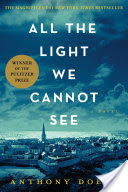
Writing Beautifully About Nazis: The Strange Failures of All the Light We Cannot See
Anthony Doerr’s body of work is filled with characters who have extraordinary gifts. In his earlier novel About Grace, a man could dream the future. In his short story collection The Shell Collector, people were gifted with everything from metal-eating to speaking with the dead. In his most recent work, the Pulitzer-prize-winning World War II novel All the Light We Cannot See, a young German boy has a preternatural ability to work with radios. And if Doerr himself has a near-magical gift, it is that of spinning sentences that each have the lush beauty and soft sheen of a perfect pearl—a gift on full display in All the Light We Cannot See.
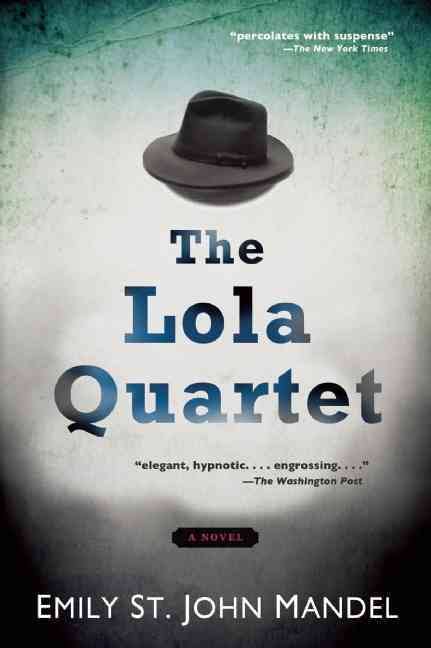
The Lola Quartet: Emily St. John Mandel
In Emily St. John Mandel’s 2012 literary “thriller” (misnomer though this may be for a novel that is more suspenseful than actively thrilling) a moderately successful reporter finds his life upended when his sister sees a photo of a young girl who looks exactly like him. Haunted by the possibility that he has a daughter he never knew about, Gavin slides into a life of fraud, unemployment, and finally violence. The seeming stability of his life was just an illusion; in fact, it is a net, on which he rested for years but through which he can easily slip.
In this novel, the world of crime and poverty is distinct from, yet terrifyingly close to, the everyday world of law-abiding, middle-class citizens. The stories of Gavin, the other members of the jazz quartet that sustained him in high school, and the girl who disappeared while carrying the mysterious child, weave a tighter and tighter web that draws every character under the surface of the everyday. Mandel shows skillfully how the rest of society maintains itself only through a conspiracy of denial, in which people willfully refuse to see the addictions, abuse, and trauma that hide behind the closed doors of their neighbors’ homes.
The novel, whose prose doesn’t have quite the mature elegance of Mandel’s most recent work, the spare and gripping Station Eleven, doesn’t make its characters round enough to render fully convincing the mysterious self-destructive impulse that propels so many of them. But it is a sensitive, gripping portrayal of how fragile a construction American “normalcy” really is.

A Fundamental Misunderstanding of Tess of the D’Urbervilles
Tess is just a humble milkmaid when the local landowner has his wicked way. Her new beau, the smarmy Angel Clare, is none too pleased when he finds out she’s already been deflowered. What is a girl to do? Bloody revenge of course, and an ending to touch the hardest of hearts.
Pulp! The Classics is an inspired idea. Who wouldn’t want to read irreverent re-tellings of classic literature that highlight their universal–and therefore, potentially lowbrow–themes? After all, with slightly different execution, Hamlet is just a revenge story, The Great Gatsby is just a crime thriller, and Alice’s Adventures in Wonderland is a forebear to Pineapple Express.
And maybe one could argue that this Tess of the D’Urbervilles cover proves a similar theorem: without Hardy’s sensitive and socially conscious artistry, Tess is nothing more than exploitative erotica. But this cover isn’t just oversimplifying the book’s themes, as the other covers in the series do; it’s actively (and offensively) reversing them. “She’s no angel”?? Tess is about a compassionate, highly moral young woman who is raped, loses her child, and is unfairly ostracized (and then executed) as a result of hypocritical Victorian sexual mores. The subtitle of the novel is “A Pure Woman Faithfully Presented.” It takes its name from “the D’Urbervilles”–the noble name Tess’ father vainly tries to appropriate for their family–rather than her actual name, Tess Durbeyfield, because she possesses nobility in spite of her social standing. The entire point of the book is that she is a goddamn angel, in all the ways that count.
Links We Loved This Week — 5/20/16
Katherine Dunn, author of Geek Love, died last week, so this is a bit late, but Vogue reprinted a magnificent essay by Dunn on the bad girl. “Women who pay their own rent don’t have to be nice,” Dunn wrote. “They can afford to be real.”
The Belle Jar has A List Of Things In Literature, Music and Art That Are Actually Metaphors For Women, including “The sea is a good metaphor for women because it’s always wrecking shit that men love” and “Look, I don’t know who decided that cats are feminine and dogs are masculine, but someone did and that idea has stuck and now we all just have to live with it.”
At LA Review of Books, Graham Daseler writes about whether there has ever been a truly great Hollywood Novel.
The Times Literary Supplement writes about the benefits of pretentiousness: “cultural eclecticism, and an attendant willingness to take risks even if it makes one look foolish or over the top, has always been an essential driving mechanism in the arts.”

The Pleiades by Ivan Bunin
It’s dark. Not caring where I go, which path I follow,
Past sleepy ponds I stroll.
Of autumn freshness, leaves and fruit the fragrance mellow
Drifts over all.
The garden’s almost bare, and through the branches whitely
The stars of evening show.
Dead silence reigns. Murk clothes the paths. It’s nighttime.
My steps are slow.They’re slow, but wake the hush… High in the sky’s cool
darkness,
A princely diadem,
The icy Pleiades blaze diamond-like and sparkle,
Each one a gem.
On its face, “The Pleiades” by Nobel Prize-winning Russian author Ivan Bunin (translation from All Poetry) contains an inspirational (and somewhat unoriginal) message: when life seems dark, confusing, and/or pointless, look at the stars, and their transcendent light will lead you to your spiritual home. Continue reading →

Peter and Wendy by J.M. Barrie
…every spring cleaning time, except when he forgets, Peter comes for Margaret and takes her to the Neverland, where she tells him stories about himself, to which he listens eagerly. When Margaret grows up she will have a daughter, who is to be Peter’s mother in turn; and thus it will go on, so long as children are gay and innocent and heartless.
“Gay and innocent and heartless” is the perfect last line for J.M. Barrie’s classic novel about never growing up, because children can’t understand it. When I read this line as a child, it nagged at me for years, because I couldn’t reconcile the apparent contradiction. Innocence is the epitome of goodness, or so I thought.
But once I, like Wendy, betrayed Peter Pan by growing older, and reread the novel as an adult, the conclusion made perfect sense. Peter is the embodiment of guilelessness and joyfulness, and so is relentlessly charming, but is also terminally selfish. Innocence is unsustainable unless it is accompanied by a pure self-centeredness, which is why we never blink an eye when Peter forgets Wendy for decades, or is tempted to stab Wendy’s little daughter, Jane, shortly before the end. He wants to eliminate this child out of resentment, because she symbolizes the passage of time that has taken Wendy away from him, and reminds him of the reality that he would prefer to reject. But he doesn’t mean anything by it.
So what better day to celebrate this author than the ultimate symbol of the passage of time: his birthday. Happy 156th birthday, J.M. Barrie!
Links We Loved This Week — 5/6/16
In the LA Review of Books, GD Dess holds up the failure of Purity as evidence that Jonathan Franzen is part of kitsch culture.
The tale at this juncture finally transmogrifies from a so-called realistic social novel into a novel of what James Wood has called “hysterical realism,” in which the conventions of realism are not abolished but, “on the contrary, exhausted, and overworked.” …Franzen has abdicated his writerly duty, and this dereliction demonstrates a certain authorial contempt for his readers.
Turns out Walt Whitman was really into “manly health” and cutting down on carbs way before it was cool.
Person of Interest executive producer Jonathan Nolan doesn’t just believe that Facebook will destroy the world, he takes it as a given (via AV Club):
A lot of things that Samaritan espouses are believed by the people who work for Samaritan, the same way that I’m sure people who work for Facebook don’t believe that they’re working for the company that will destroy the world. But, you know, they are. And everyone gets through the day rationalizing their own existence.
As you may know, The Good Wife will have its final episode this Sunday. Here are some of the best articles and interviews making sense of its incredible first few seasons, and (by almost all accounts) its struggling seventh:
- Alan Sepinwall at HitFix takes a look at The Good Wife as the last prestige network drama. “no show has dealt with the struggle to defy societal expectations and keep one’s feelings under tight wraps as often, or as well, as The Good Wife,” he writes. (Ignore the part where he says that Parenthood was a rival for this show. I just watched the whole thing. It wasn’t.)
- Salon jumps on the “there will never be a great broadcast drama after The Good Wife” bandwagon.
- At the New York Times, Christine Baranski has a very surprising favorite scene from the show; Michael J. Fox and other cast members also weigh in.
- Also in the NYT, James Poniewozik writes a good-bye-Good-Wife article notable for describing Jason as a “laconic, bearded sex cowboy.”
- The Kings looked back at the show. Robert King says, “On our show, no one’s really shooting at each other. Their words are the guns.”
When Men Write Women: Success Stories
I think of a man, and take away reason and accountability.
Jack Nicholson, As Good As It Gets
I’ve had dozens of moments when I’m reading an otherwise great book and a woman says something, or does something, that jolts me out of the world I’ve been inhabiting and reminds me that the author has his own particular notions of women, and not necessarily correct ones. From female characters who fulfill some male fantasy of what women should be like (hot, mostly), or who have no depth at all beyond their looks, to those who have one highly stereotypical personality trait whereas male characters are fully-rounded: the sins committed by authors of all stripes against female characterization are varied, and unfortunately, still frequent.
Sometimes it seems that the feminist internet has rightly given up on even encouraging men to write women at all; if we want a great female character, we assume we’ll need to read Chimamanda Adichie, Willa Cather, Claire Messud. But every once in awhile, a gifted male writer will come along who has an understanding of the unique power structures that affect women, but also is capable of infusing the same vision of humanity into his female characters as he does into his male characters. Here are a few of my favorite female characters written by men. Comment below to share your favorites! (Or to rant about the worst failures. We love rants here at Adversion.)
Aaliyah Saleh, An Unnecessary Woman – Rabih Alameddine
The inspiration for this post, Aaliyeh is the mid-seventies woman with blue hair who narrates Rabih Alameddine’s novel.
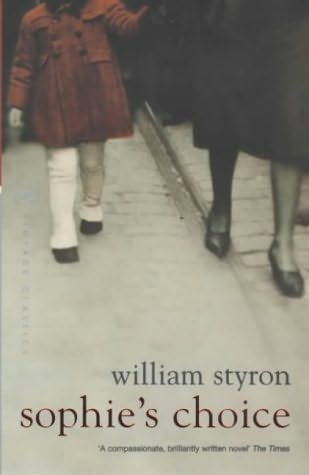
William Styron’s Appropriation
“‘Have you read D.H. Lawrence’s Lady Chatterly’s Lover?’ I had to say no.
…’Read it,’ she said, her voice husky and intense now, ‘get it and read it, for the sake of your salvation… Lawrence has the answer–oh, he knows so much about fucking. He says that when you fuck, you go to the dark gods.'”
Sophie’s Choice by William Styron is more sensitive and vividly characterized than I would have expected, but is still a manipulative, politically problematic story that appropriates the Holocaust narrative to create slightly sickly melodrama. By explicitly framing the titular “Choice” (made by a blonde Polish woman, because Styron legitimately thought the Jews were paid too much attention) as the “ultimate evil,” the novel is clearly attempting to meditate on the concept of evil, but only manages to sensationalize it. Continue reading →
 Adversion