Links We Loved This Week — 7/22/16

Read the heartbreaking tweets Leslie Jones posted before being chased off Twitter by racist harassment. Vox has a good write-up of the topic, too.
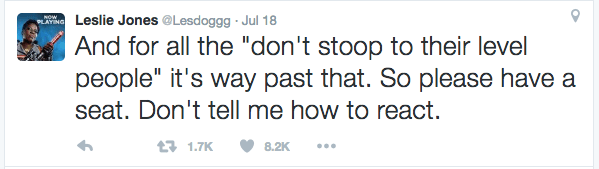
Screen Shot 2016-07-20 at 9.45.37 PM.png

Emily Nussbaum wrote a fantastic piece about Braindead and Mr. Robot. Her analysis of why Braindead succeeds despite its insane-sounding premise is spot on. (via The New Yorker)

Matt Damon did a Reddit AMA in honor of the new Bourne movie. His answers are great — or as one poster amusingly put it, “my boy’s wicked smaht.”

How well do you know Anne of Green Gables? This is a pretty basic quiz, but it should whet your appetite for the planned 2017 revival (and if you get less than 100%, you should probably just go rewatch. Actually, we probably all should).


21 Times Center Stage: On Pointe Lived Up To Exactly What It Was

Center Stage: On Pointe is a straight-to-Lifetime sequel to the cult hit dance movie of 2000, which is probably most famous for its unhinged final dance sequence, which involved, among other things,  Michael Jackson, awkward sex, and an EPIC costume change. So if you expected that it would be an even more absurd movie than the original, with gloriously nonsensical plot devices, inexplicable directing choices, and satisfying shoutouts to the original, you’re in luck: it was. And here are 21 reasons why.

(Fair warning: if you aren’t a fan of the original, you probably won’t get much out of this post. Or out of the movie itself, to be honest.)

Continue reading →

Every Scene in The Neon Demon Should Have Looked Like This

Nicolas Winding Refn’s The Neon Demon is an irreproachably beautiful movie, which is problematic when making a movie about beauty. Ostensibly the movie decries objectification of beautiful women, while the cinematography enhances it, to the point that any feminist critique is rendered inert at best and hypocritical at worst. Continue reading →

The Huntsman: Winter’s War Is a Movie, and These Are Things That Happen In It

I’ve never seen a movie quite like The Huntsman: Winter’s War. Don’t get me wrong, it’s a truly terrible movie, one of the worst I’ve ever seen. But if nothing else, it’s a true marvel of innovation. It’s the only movie I’ve ever seen that is a prequel, and also a sequel, and also manages to retcon the entire first movie. It stars Jessica Chastain, Emily Blunt, and Charlize Theron, and is damn near unwatchable (unless you’re laughing through the entire thing, as the Adversion writers were). And it’s so stupid, that in order to make fun of it, all you have to do is literally describe what happens. Little to no editorializing necessary.

So here goes: Continue reading →

Dakota Johnson Should Have Been an Oscar Contender for Fifty Shades of Grey

The Razzies have come under fire in recent years for being an opportunistic, publicity-hounding sham that doesn’t add anything new to the conversation, or even manage to be funny. Rather than effectively satirizing “legitimate” award shows like the Oscars, they’ve become known for taking in-poor-taste potshots at easy targets, beating each year’s dead horse until it’s really, really, really dead.

And what’s an easier mark than Fifty Shades of Grey? Both the book series and the 2015 film are embarrassing blemishes on our culture, appallingly sexist and mind-numbingly inane pornos that reinforce damaging stereotypes and actively encourage young women to seek–and try to “save”–abusive partners. So naturally, it received no less than six Razzie nominations, pretty much every single one for which it was eligible. Continue reading →

The Ethics of The Game: How The Big Short Can Teach Us To Appreciate Mockingjay

As a 2008 college graduate who entered adult life in the middle of the country’s downward spiral into recession, I found The Big Short extremely depressing. In its detailed depiction of the machinations of the collapse, it reminded me at every turn of how much misfortune and fear were suffered by regular Americans due to the greed and blindness of the self-declared “best and brightest.” And its sardonic portrayal of how the system righted itself and kept going, without any significant reform, while everyone else suffered, reminded me of the great disappointment of the bailout. Reforms were gutted, while the banks deemed “too big to fail” got rescued with almost no consequences to themselves. Meanwhile, individuals all over the country got evicted. Filed for bankruptcy. Lived in fear.

The Big Short examines a slice of this vast injustice, but from a point of view so narrowly focused that it risks celebrating the exact culture it’s critiquing. Meanwhile, The Hunger Games—seemingly so removed from such pragmatic issues as credit default swaps—presents a luminous alternative to the shortcomings of The Big Short.

Fair warning: I’m going to assume everyone has had a chance to see these movies if they’re going to, and discuss them in full beneath the cut.

Continue reading →

88 Thoughts I Had While Watching The Revenant

The Revenant is one of the most visually resplendent films I’ve ever seen, capturing the wilderness of the early 19th century Louisiana Purchase with an almost painful loveliness and staging its unrelenting violence with confidence and restraint. Unfortunately, beneath the flashy visuals and exemplary performances lies a boilerplate revenge story that is empty of heart, soul, and psychological insight. Cinematography aside, it plays like a particularly sophomoric superhero movie, explicitly stating its (exceedingly trite) themes left and right and eschewing any meaningful character development for the sake of a gratuitously satisfying kill shot.

(It also doesn’t help that there were no female characters of consequence. What can I say? I get bored in movies where women get raped and killed but don’t get to speak.)

Continue reading →

ROOM’s Metamorphosis from Feminist Critique to Oscar-fied Inspiration Porn

In the first half of Emma Donoghue’s meticulously psychological Room, the character of Ma is just that—she’s a mother. She’s a near-saintly, self-sacrificing angel who unfailingly thinks of everything and always knows how to make everything better. She’s also not a person in her own right, but that’s the entire point, as the story is told from her five-year-old son’s perspective. To him, she is just “Ma,” because he’s never known her to be anything else. Continue reading →